Even after someone dies, their traces survive for a while—perhaps much longer. Unlike the days when a few photo albums were all that remained, today’s traces are densely woven: messages, inboxes, voice memos, payment records, search habits, playlists, even sentences left in draft. The problem is that this is more than a collection of records. In it we read a person’s tastes and judgments, hesitations and rhythms. Digital inheritance is therefore too complex to distribute like property or leave unattended like memories. The important question is less who possesses the remaining data than who should handle it, and how.
1. Why Digital Inheritance Is More Than Files
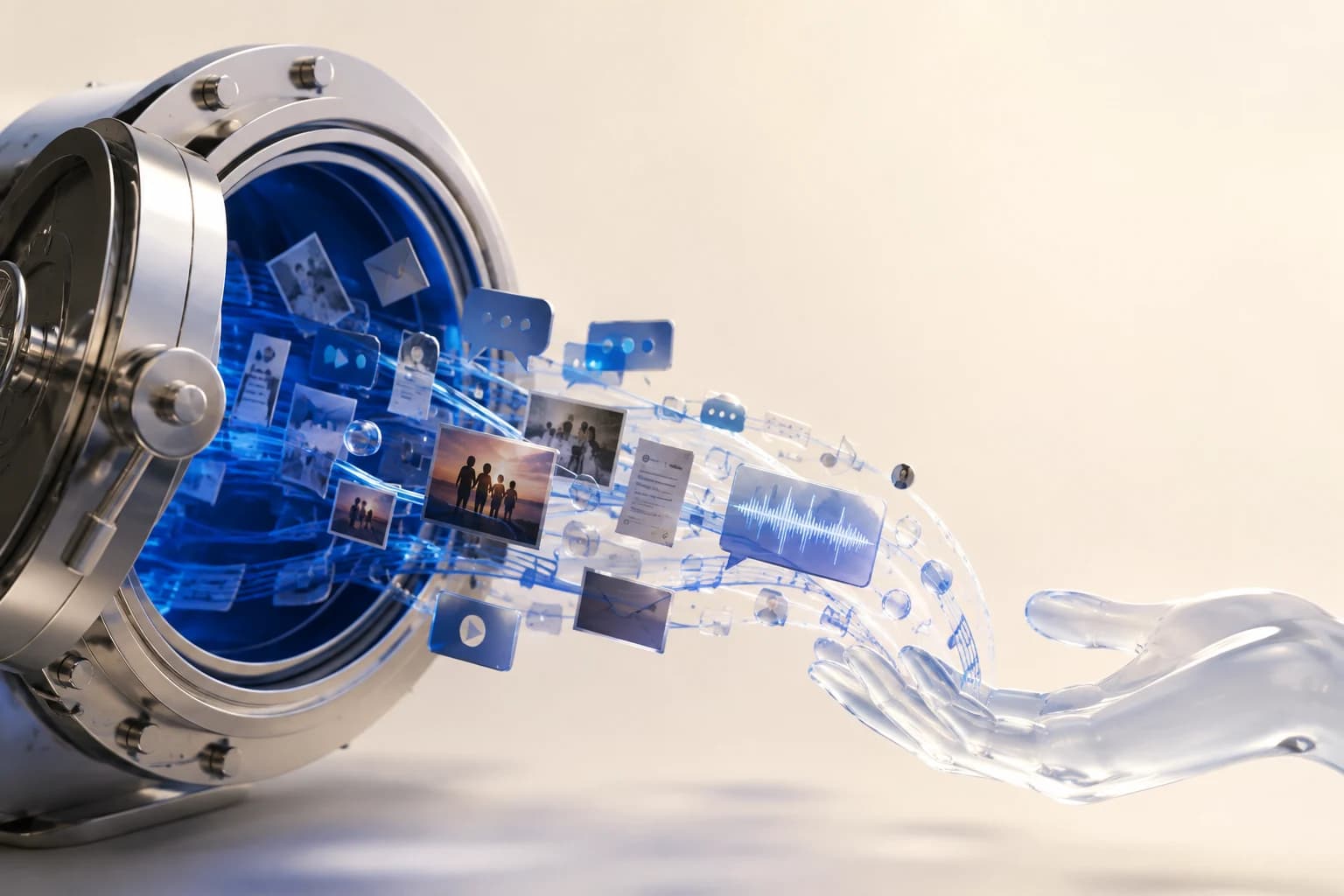
 The multiple layers of a digital estateView original
We usually imagine inheritance as things with clear ownership, such as money, houses and contracts. Digital inheritance keeps unsettling that formula. An inbox alone may combine financial information, business contracts and intensely private emotional records. A cloud album is a family memory, but some photographs may be ones the person never wanted anyone to see. A voice recording can offer great comfort to the bereaved while also risking becoming material for AI voice cloning in a wholly different context.
Because of this complexity, digital inheritance has three simultaneous layers. The economic layer includes items with real value: subscription accounts, content revenue, cryptocurrency wallets and e-commerce sales data. The memory layer contains photographs, messages and videos that family and friends want to preserve. The personhood layer comprises speech habits, patterns of judgment, preferences and frequently used sentence structures—data capable of reconstructing what makes that person themselves. This third layer makes the issue especially sensitive. It can be transferred like property, yet careless handling can damage dignity.
Technology blurs these boundaries further. In the past, leaving files behind did not make it easy to make them function as though alive. That has changed. Training on messages and voice recordings can create responsive avatars; old diaries and posts can reproduce a particular writing style. Digital inheritance is no longer a static collection. With the appropriate tools, it can be reassembled into an interactive form. Inheritance therefore cannot end at transferring ownership. Detailed rules governing use, copying, prohibited reworking and the scope of disclosure must be designed alongside it.
2. Comfort for the Living Often Conflicts with the Wishes of the Dead
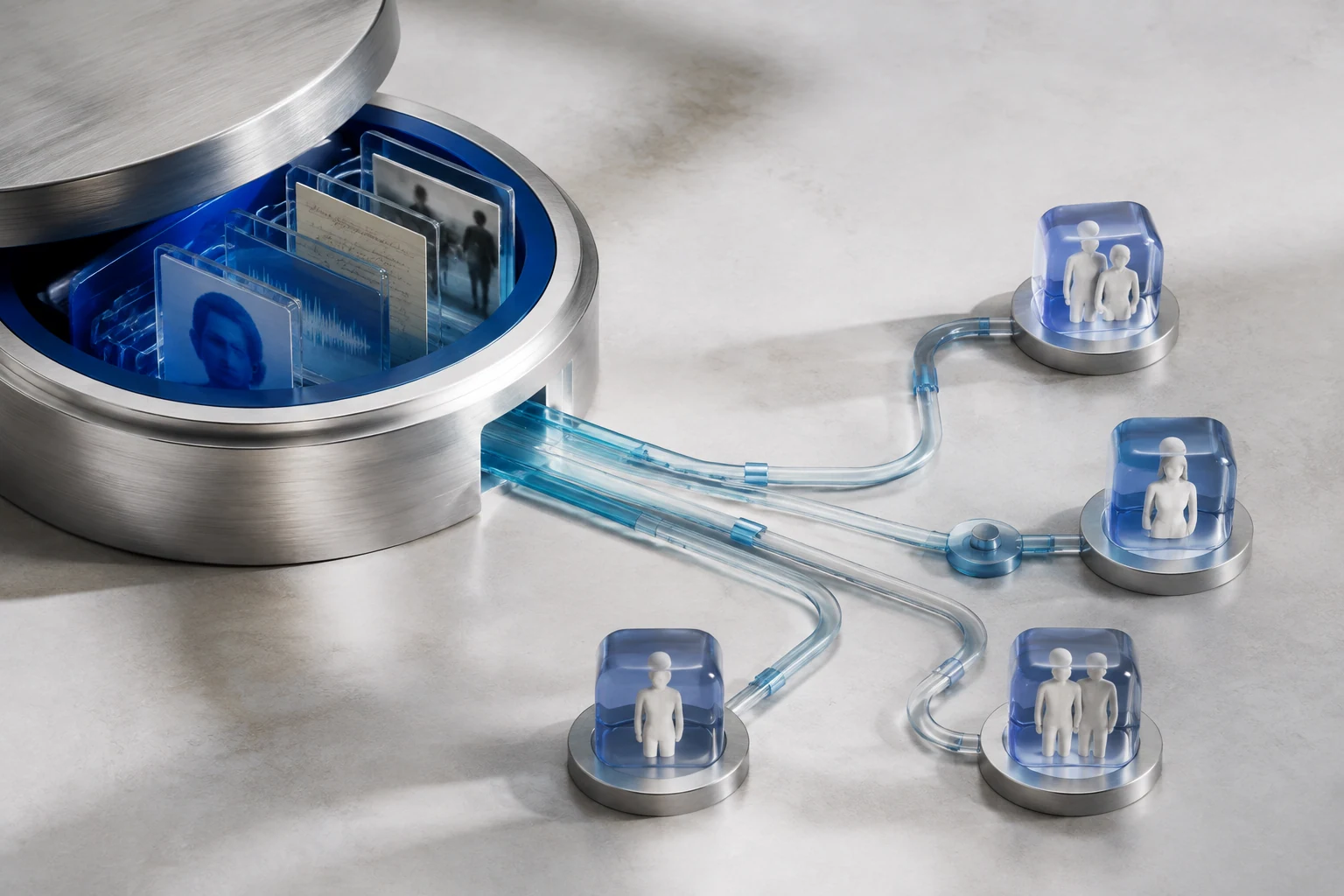 A flowchart of inheritance and access permissionsView original
Real conflicts often begin with good intentions. A family wants to access the deceased person’s account to back up photos. A colleague wants unfinished documents to complete a project. An artist’s survivors want to organize manuscripts and audio into a memorial archive. Each action is understandable. Yet those very intentions can erase boundaries. When private search histories, unclosed notes and unfinished drafts are disclosed all at once, remembrance easily becomes intrusion.
The key is that the bereaved family’s feelings and the person’s wishes do not automatically align. Those left behind may want to hold on, while the person who has gone may have wanted erasure. A family may want every conversation backed up ‘to remember,’ but the individual may have wanted a particular period to disappear. One person may gladly leave their voice as educational material; another may want it never played again after the funeral. The ethics of digital inheritance therefore cannot be measured by the size of love. Greater love may require stricter procedures.
Another difficulty is that platforms serve as de facto estate administrators. Many services have account recovery or deceased-account policies, but their criteria usually center on technical convenience and legal risk. Some grant family access relatively easily; others allow very little even with a court order. During life, users scatter data across dozens of services, yet after death there is almost no way to integrate those fragments under one set of wishes. Survivors wander among different terms and procedures, and the person’s intent is considered last.
What we need is therefore a digital will system designated in advance, rather than an emotional agreement. At minimum, people should be able to choose four things while alive: which data to delete completely; which to make available only to specified family members; which to archive without external disclosure; and whether to permit secondary uses such as AI reconstruction or voice cloning. Without these choices, survivors make arbitrary decisions caught between goodwill and guilt, decisions that almost always bring regret later.
3. Future Inheritance Systems Must Govern Use, Not Just Storage
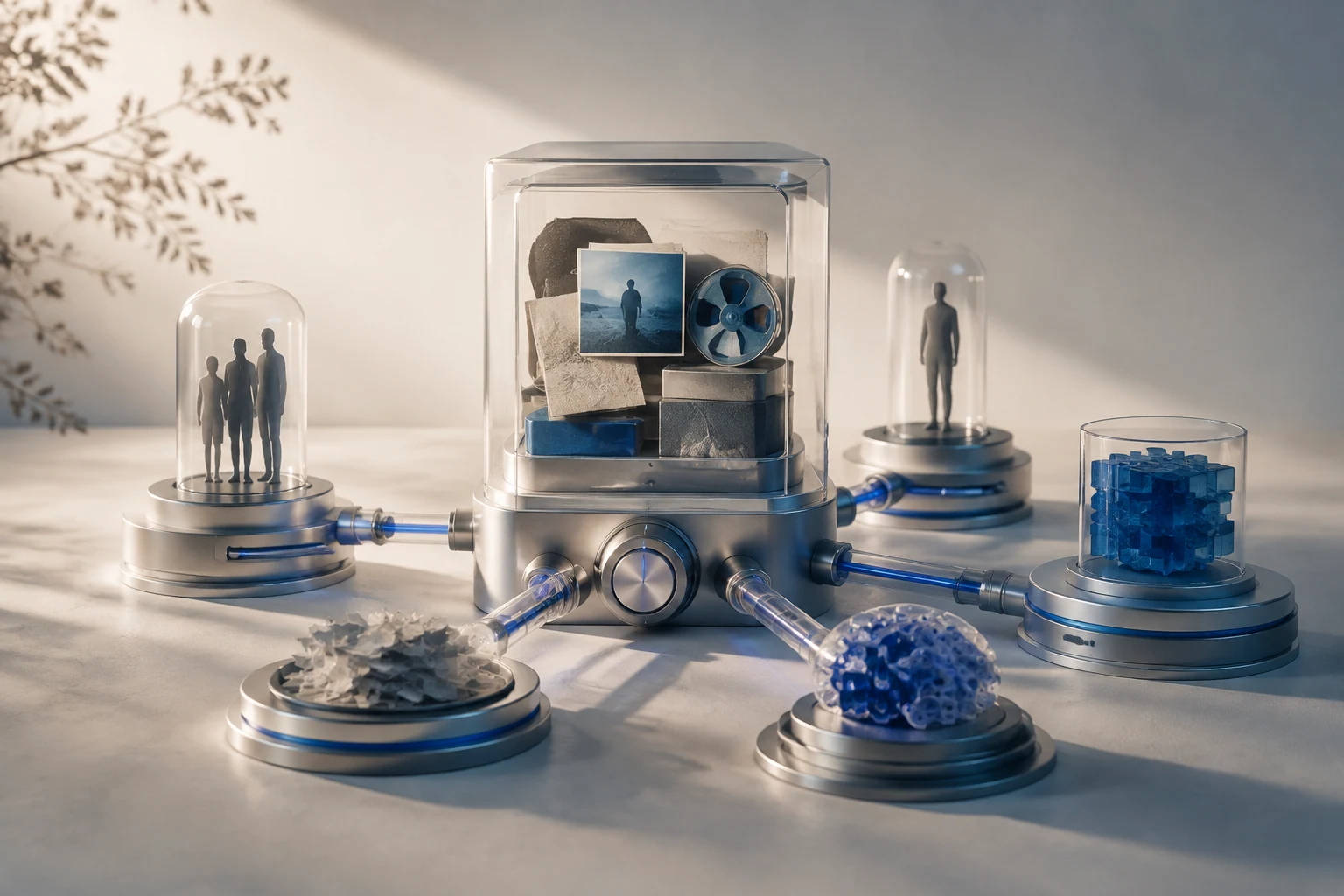 A structure that designs memory preservation and restrictions togetherView original
The work required of law and institutions is becoming clear. First, treat digital inheritance as a class of assets with differentiated permissions, not a simple property inventory. Distinguish what can be transferred like financial assets, what can be preserved as family memory, and what requires restrictions to protect personhood. Second, design inheritance around permissions for actions, rather than files themselves. May someone view, copy or disclose the data, or use it for AI training? Unless these permissions are separated, permission to view can easily be mistaken for unrestricted use.
Third, platforms should not be able to claim their responsibilities are fulfilled merely by retaining data after death. They must also keep histories of who accessed it and on what grounds, what was downloaded, and whether it was connected to AI generation. Digital inheritance is easily copied in silence; without transparent logs, even identifying a violation is difficult. Fourth, society must learn not to regard deletion as failure. We often believe mourning requires keeping everything, but for some memories, protecting their disappearance is more respectful than preserving them.
In the AI age, distinguishing preservation from re-creation is especially important. Saving a photograph and combining photographs, voices and sentences into an interactive persona are entirely different actions. The former preserves a record; the latter is closer to reworking an existence. Ethical thought collapses the moment these are treated as equivalent. Leaving someone’s traces may be possible. Making those traces speak again is not automatically permitted. Drawing that boundary clearly will be central to the next generation of institutions.
Digital inheritance is ultimately a question of relationships more than technology. Judgments about what should remain, where to stop and whom to entrust are tied to our understanding of human dignity. I believe inheritance ethics should move toward more precise restraint, rather than more preservation. A society that distinguishes what may remain from what must stop is more mature than one that retains every trace. In an age when data begins resembling people for too long, our responsibility is to design boundaries so that resemblance does not become harm. Inheritance is ultimately not about ownership, but about whom we respect, and how, until the end.