
We now entrust more and more cognitive functions to external systems: memory, judgment, writing, scheduling and even prioritization. A notes app fills the blanks in our heads first; a recommendation feed proposes our next actions first; AI assistance sketches a sentence before we write it. The problem is how smoothly this change occurs. As inconvenience decreases, boundaries dull, and the longer we receive help, the harder it becomes to distinguish our choices from the system’s defaults.
What we need now is therefore more than a simple guide to using tools. We need a structure that preserves a history of consent: which function we delegated, when and under what conditions, what we deferred and what we reversed. I call this a consent ledger. It is a mechanism for agency, not surveillance. It is the minimum design needed to maintain our own axis of judgment while moving with technology, rather than rejecting it.
1. As Convenience Deepens, Consent Can Become Shallow
 A ledger interface for managing the history of consentView original
Early digital tools had clear request–response structures. I searched and results appeared; I saved and files accumulated. Today’s systems operate more like always-on assistants. They suggest before being asked, organize before we notice, and recommend candidates before we deliberate. Perceived efficiency clearly improves, but users’ boundaries of consent become blurred. It is difficult to remember when we explicitly granted permission, when automatic delegation began, or what we left approved by default.
Many people respond, "Is it not enough that it is convenient?" In the short term, they are right. The issue is long-term accumulation. Repeated recommendations reinforce tastes; sentence structures repeatedly accepted rearrange patterns of thought. What initially looked like a productivity tool becomes infrastructure shaping habits of judgment. Users still feel no great shock because the change is gradual rather than abrupt. That very gradualness is dangerous. Sudden change raises our guard; a succession of small improvements puts it to sleep.
This is why a consent ledger matters. Consent is not a single click in a checkbox but an agreement continually renewed over time. We must periodically reconsider whether the autocorrection permitted today remains appropriate a month later, whether the same criteria hold when circumstances change, and whether work and rest require the same degree of intervention. If consent is alive, its history must be alive too. Unrecorded consent is eventually replaced by habit, and unchecked habit becomes a default.
This issue is especially clear in writing and decision support. Having AI create a draft and editing it myself is highly efficient. Yet repetition makes a "variation on an AI draft," rather than "a sentence I revised," the standard. That is not inherently bad. But without a log of what I accepted and rejected, it becomes difficult to say that I chose the direction of change. A consent ledger makes this process visible. Visibility is the beginning of control.
2. A Consent Ledger Is an Operating System, Not a Feeling
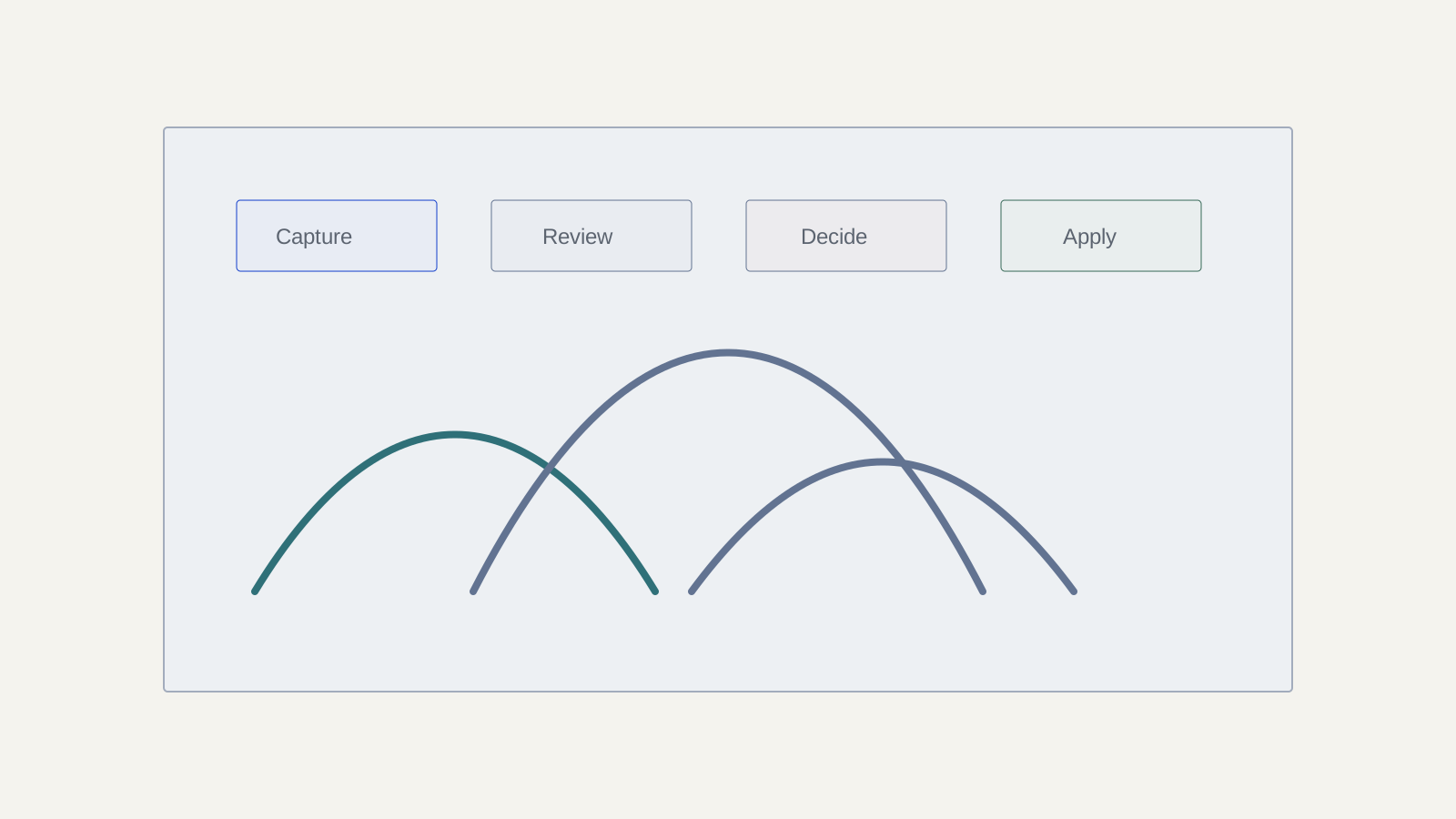 An operating structure connecting capture, review, decision and applicationView original
Mention a consent ledger and many people imagine loose notes resembling a diary or retrospective. To be effective, however, it must be designed as an operating system. Four stages are enough for a minimal structure: Capture, Review, Decide and Apply. Capture collects assistance events: behavioral traces such as the acceptance rate of autocomplete, click-through on recommended paths, or approval of adjusted schedules. Review reads patterns periodically. What am I approving almost automatically, and where do I repeatedly feel resistance?
Decide makes rules explicit. Separate contextual boundaries, such as "allow draft suggestions during work, but not in personal journals." Simple all-or-nothing rules rarely survive real life, because a person’s day has multiple modes. Mornings may focus on execution, afternoons on collaboration and evenings on organization; even the same person’s judgment changes with their energy. The ledger must assume this variability if it is to work.
Apply changes both system settings and habits. Technical changes are necessary: adjusting permissions, reducing notification intensity or lowering the frequency of automatic suggestions. User routines must change as well. A personal rule that the concluding paragraph of an important document must be written manually, for example, preserves a minimum of human agency at a crucial point of judgment. The ledger is therefore both a tool configuration file and a behavioral protocol.
Accountability is another reason to treat the consent ledger as an operating system. Organizations will increasingly ask people why they made a decision. "Because AI recommended it" is not a language of responsibility. We need explainable logs showing which recommendations we adopted, by what criteria, and how we considered counterexamples. The ledger is advance quality management, not an after-the-fact excuse. Recordable criteria help stabilize decision quality.
The system need not be complex. A single weekly table is enough to begin, with four fields: type of intervention, whether accepted, reason and next adjustment. Continuity matters more than perfection. Patterns become visible after just 3 weeks. Some assistance clearly helps us thrive; some weakens our cognitive muscles. Intuition alone does not retain that distinction for long. The ledger compensates for the limits of our perceptions.
3. Future Autonomy Depends More on Revision Than Refusal
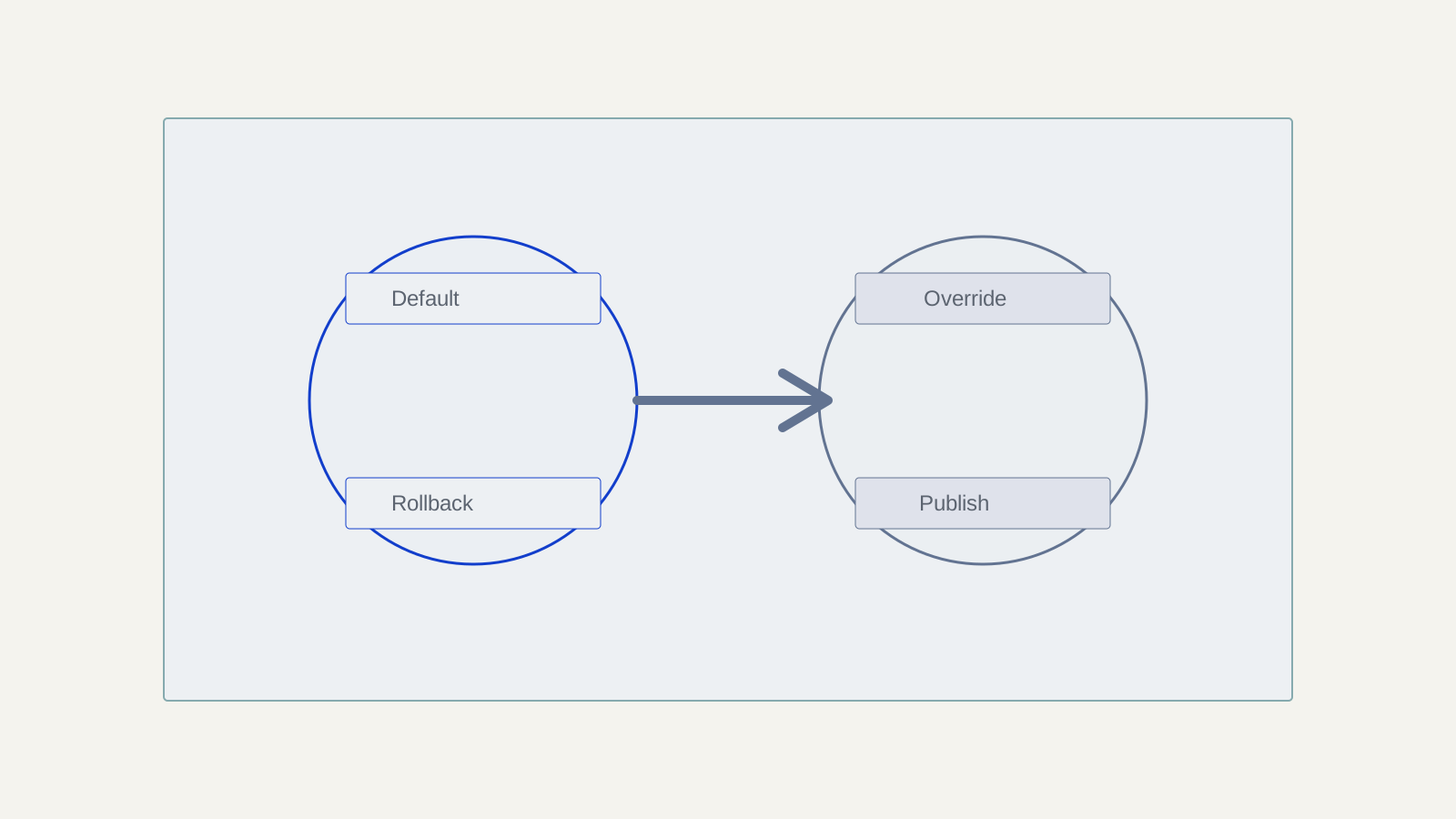 A map of revisability connecting defaults, overrides, rollback and publicationView original
Much discussion frames humans and AI as adversaries. In work and life, however, the real question is not whether to use AI but how. Total refusal usually fails to last; total acceptance usually breeds dependence. The key ability therefore lies between them: revision. Instead of accepting automatic suggestions unchanged, we must be able to override them when necessary, roll them back when inappropriate, and reissue useful ones with constraints.
A consent ledger trains that ability to revise. It accumulates evidence of which defaults I invalidated and when, when disabling automation improved results, and where stronger automation was actually needed. Technology use then becomes an operating strategy rather than an emotional reaction. The language of judgment grows specific: "I restricted it because accuracy kept declining in this context," rather than "I stopped using it because it felt unsettling."
The change matters personally, too. People usually remember failed choices while taking successful automation for granted. Over time, explaining how the present arrangement came about becomes difficult. Maintaining a ledger makes successful structures reproducible as well. Effective settings can transfer directly to another project, and trouble spots can be restored quickly. The consent ledger is both a means of self-protection and a productivity asset.
It matters even more in organizations. When people use different assistants, standards of judgment easily fragment. Without a ledger, team outputs may look uniform while internal quality standards vary widely. Review becomes contentious and accountability difficult to trace. A team consent ledger establishes minimum shared rules: for example, prohibiting automatically generated drafts for customer-facing documents while actively allowing automatic suggestions for internal brainstorming.
Autonomy is ultimately not the absence of all help. It is the ability to design the conditions under which we receive help, revise them when necessary and reverse a mistaken path. Convenience will continue to grow, and that trend is difficult to undo. The choice is clear: follow blindly, or retain agency through a recordable consent system. I recommend the latter. In the age of cognitive outsourcing, humanity is expressed more clearly through responsibly operating a self that is being updated than through preserving purity.