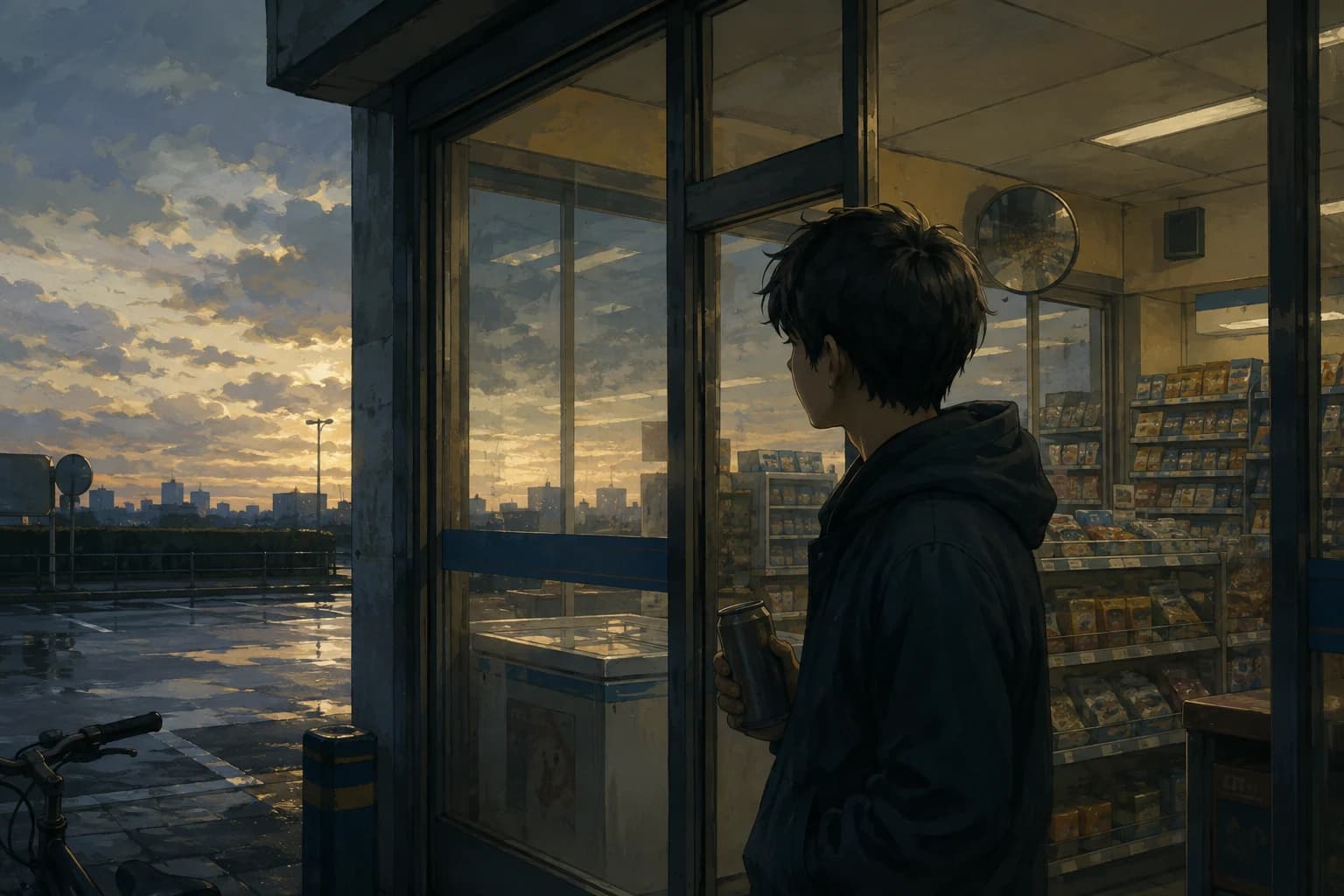
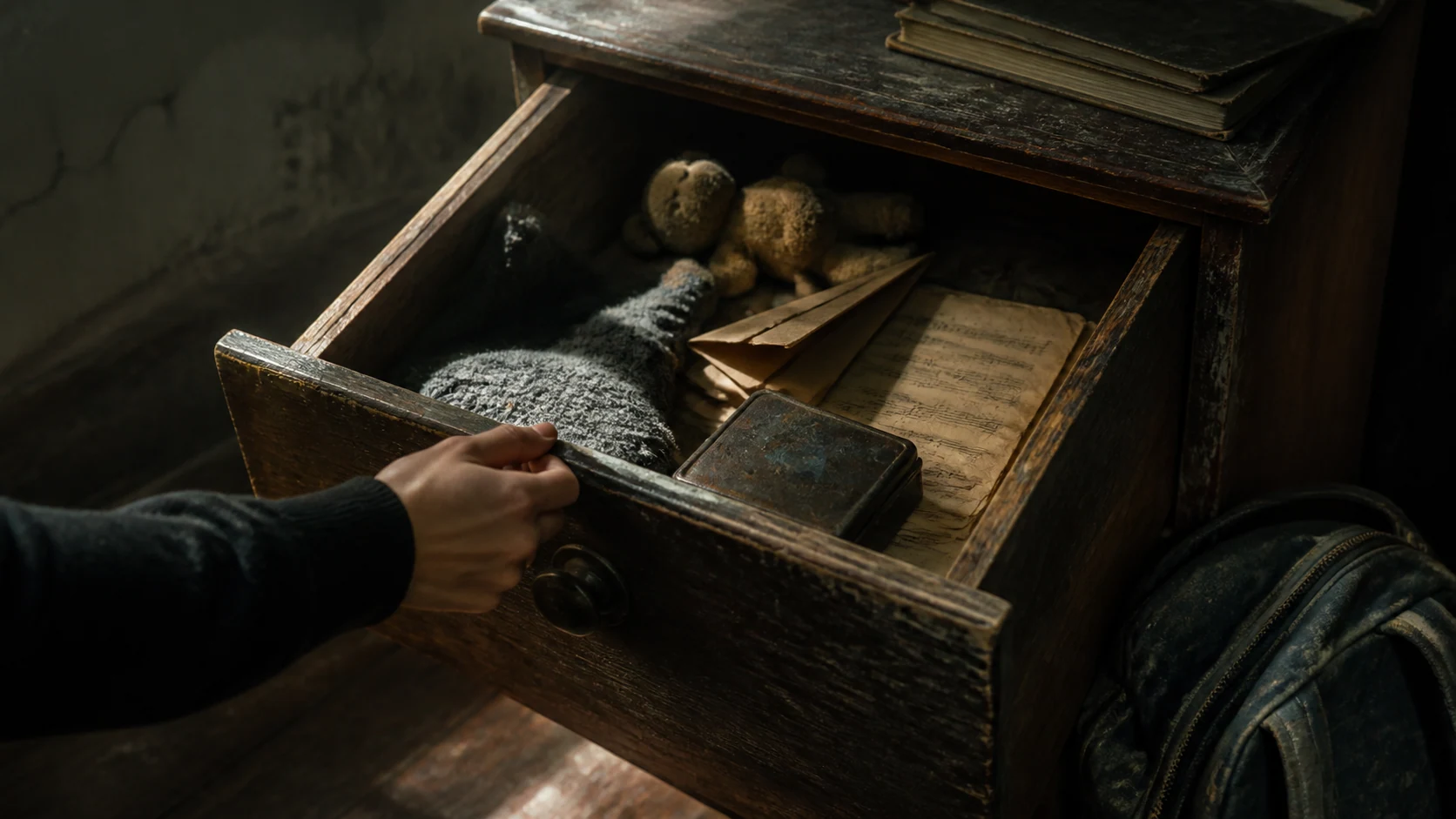
It has been a long time. A song more than thirty years old plays from a convenience-store speaker. My hand stops before picking something up. I forget what I was going to buy. If you ask why I stopped, it is because the self who once made another song from that song was there. But I put that song in a drawer called poverty and locked it away. That drawer rarely opened.
🎼 The Memory of an Awkward Melody
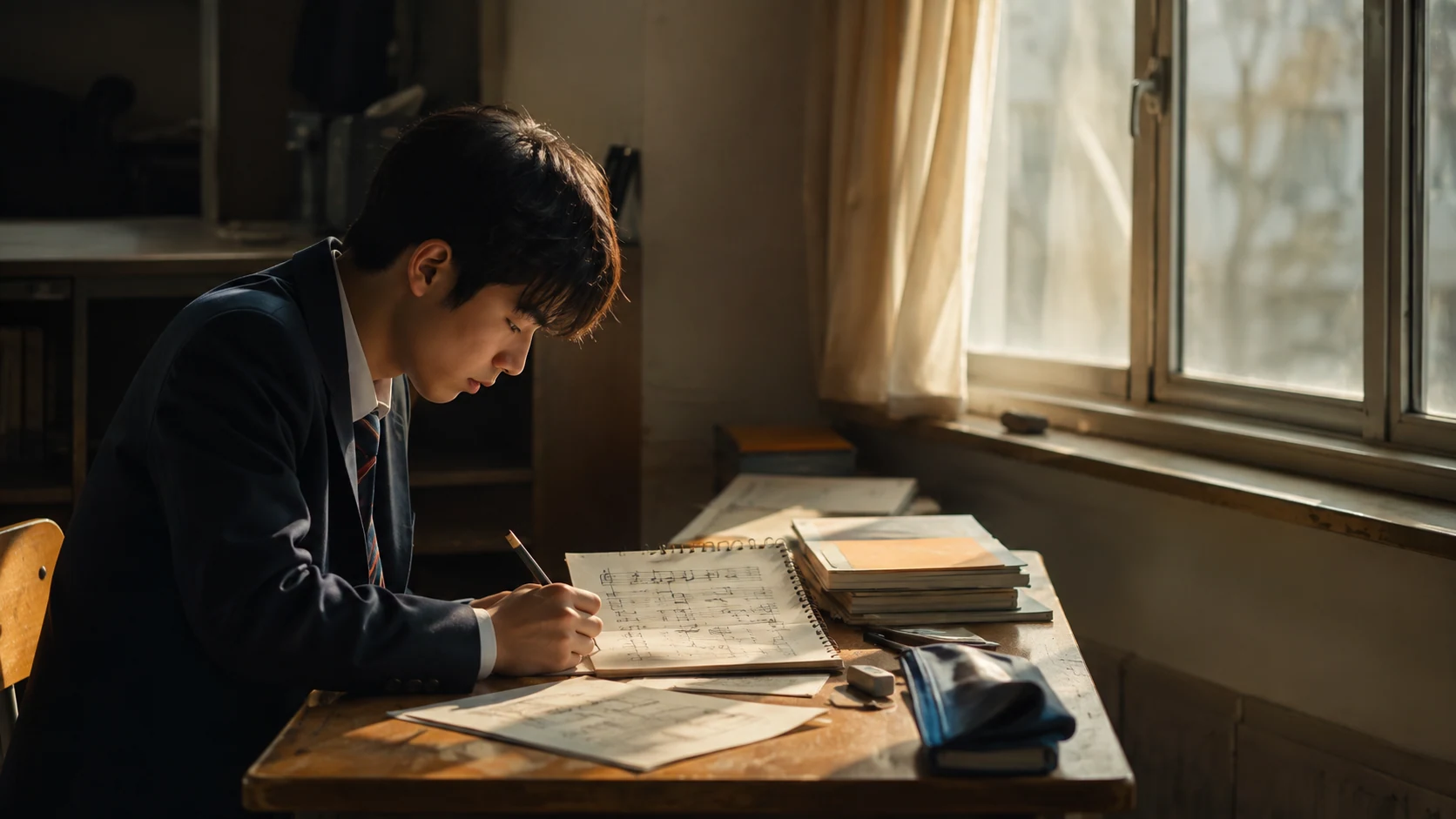
My fifteen-year-old self sits by the classroom window. I draw staff lines on a corner of my notebook and place notes on them. One up, one down, then up again. Too awkward to call a melody, but it was the only language I had. I thought it was music. Looking back, it was closer to a letter.
I can still hum that melody. I have forgotten more than half the lyrics, but my throat still tightens at the first phrase of the chorus. It probably has nothing to do with my vocal cords.
🔒 Closed Drawers
During class I tapped my pencil on the desk. It felt good when the rhythm worked; when it did not, I tapped again. My hands kept reaching toward music.
One day—I cannot say exactly why I brought this up, or why I still remember it.
When I said aloud that I wanted to become a singer, my father stopped eating and looked at me. That one look was enough. In a poor household, the dream was a luxury, and I understood without an explanation. So I changed my answer: I would become a teacher. Perhaps that, too, was another name for wanting to stand before someone and let them hear something.
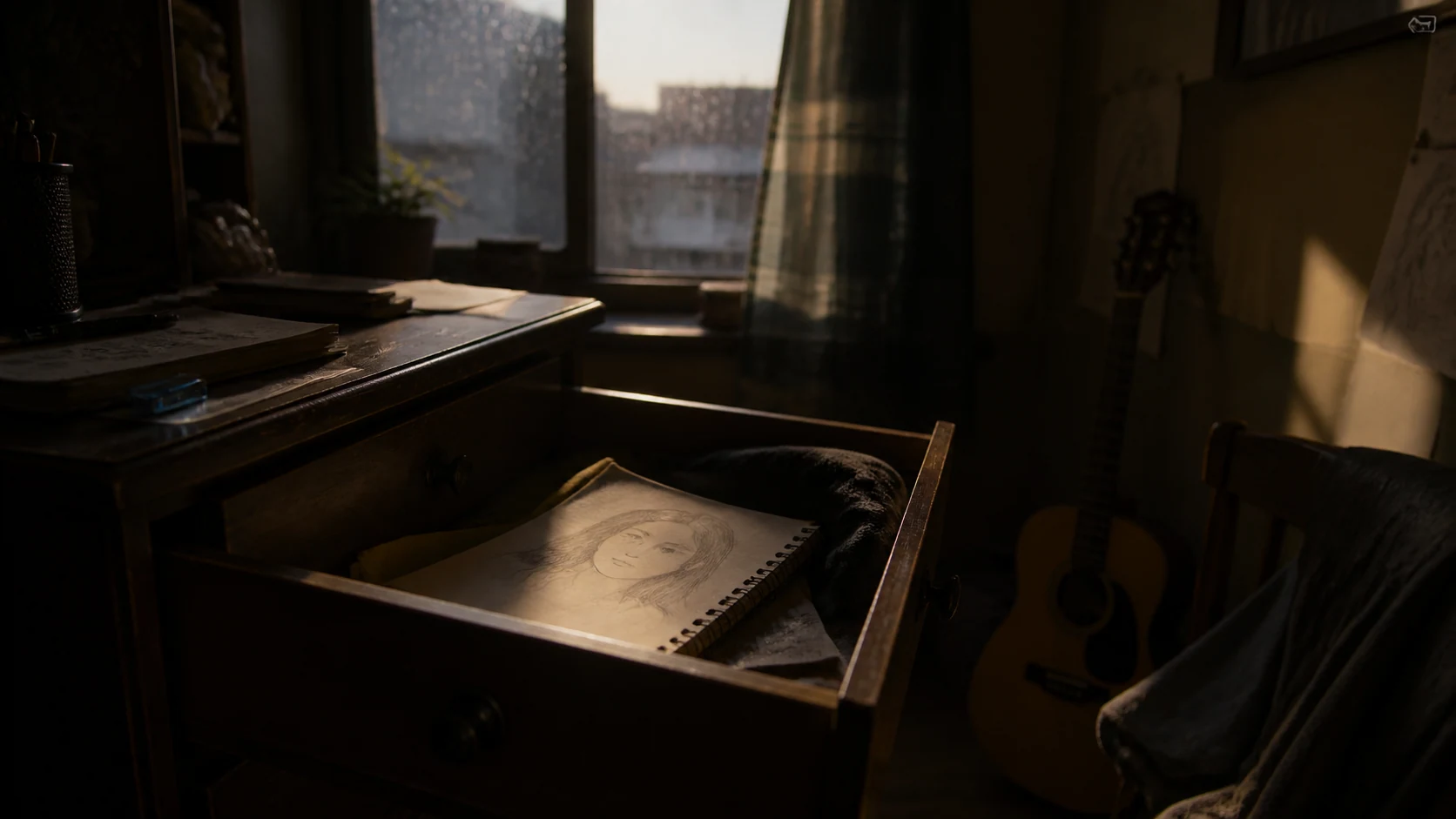
I made a song and a drawing for my first love and gave them to her. Is that right? I do not think it is. ‘Gave’ does not seem right, because I never handed them to her. I played guitar and sang alone. Then I left a drawing of her face on top of a drawer somewhere. Was the drawer hers? I do not remember that either.
When nobody was there. Because I knew that if we faced each other, I would be unable to say anything.
I think I have lived that way all my life: swallowing what I want to say, turning away with the feelings I should offer crumpled in my pocket, looking at the floor at every decisive moment. That habit does not age. Even now, as an adult, the prospect of contacting someone first freezes me in the same posture.
I left my dreams behind in the same way. They rose and fell for a long time like notes on a score, then folded themselves away somewhere and disappeared.
As a child, I was poor. Poverty was a convenient drawer. I did not use poverty as an excuse from the beginning. I learned it when I could not buy books, go places with friends or do what I wanted. Poverty was making me give up my dreams one by one. I stacked those surrenders neatly in the drawer and locked it. Once they were inside, nobody tried to take them out.
That was how I was becoming a timid child.
🪞 The Real Face in the Mirror
For a long time, I believed it was poverty. I could not study music because there was no money; I abandoned my dream because circumstances did not allow it; my environment could not take me that far. The story was solid, and I was comfortable inside it. Whoever asked, I gave the same answer. Like a well-rehearsed line.
But I look at myself now. I have escaped poverty. A salary reaches my bank account, there is food in the refrigerator, and I can afford to brew coffee before dawn. Yet I still stand in the same place. I swallow what I want to say, postpone the feelings I should offer until tomorrow, and lower my head before someone I like.
I think it was an excuse.
It was not poverty. I had simply been afraid from the start. Afraid of failure. Of rejection. Of discovering that the song I had made so carefully was nothing special. Poverty was the best place to hide that fear. Nobody calls a poor child cowardly for giving up. I stood in that shade of sympathy for a long time.
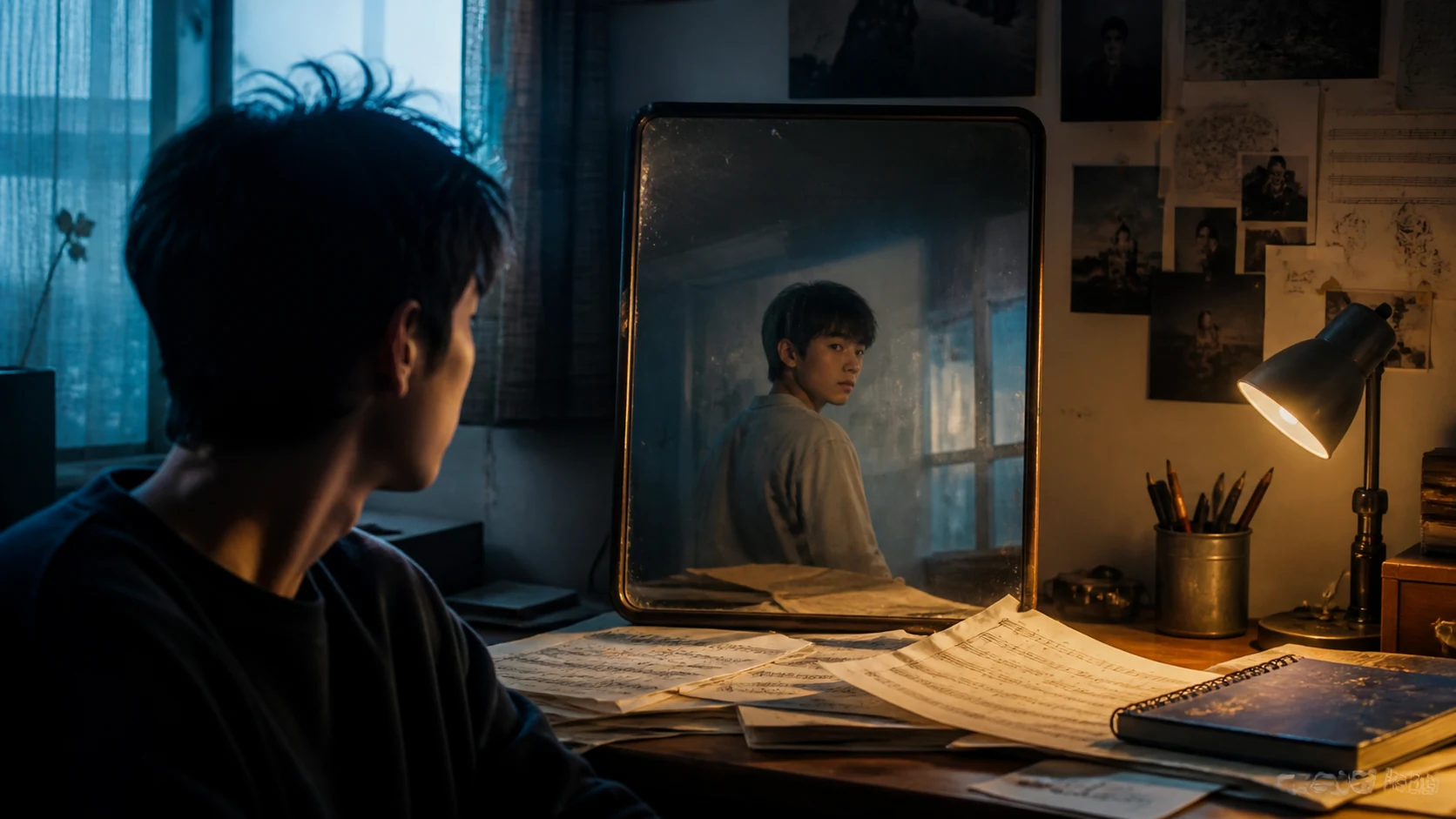
A mirror reverses left and right. The past I remembered was reversed, too: poverty standing in front, fear hiding behind it. The truth was the other way around.
📻 The Song Begins to Flow Again
The song plays again. This time I do not stop.
There is something I want to tell you. You who left a song on the desk drawer and ran down the corridor. You who fell silent at one look from your father. You who crouched inside a drawer called poverty.
You have not changed. Even as an adult, I hesitate in the same places, fall silent in the same way and bow my head before the same kinds of fear. I thought I would find myself pathetic for reaching this age without changing.
Yet last night, too, I was humming a melody before dawn. A song nobody hears. It is strange. It does not feel pathetic.
Not having changed means that you are still here. The child who was afraid but could still make a song, who could not hand it over but knew how to leave it behind, is still breathing inside me.
Even so, you made a song.
The song is not over yet. Let us open the drawer. Let us take it out again.
"The song does not end,
if you begin to sing again."
Comfort for the person I am today