
Passive income usually stops not because the business model has deteriorated, but when existing assets begin to be neglected. Even one weekly review loop noticeably reduces instability.
When first building digital assets, speed seems to determine everything. We focus on more templates, more content, more channels and more automation. This approach works quite well during initial growth. The problem comes next. Eventually, the same effort brings smaller gains, and in some months revenue seems to slump for no reason. Many people choose a simple solution: “Make more.”
But when the revenue curve wobbles, there is something to check before creating more: the health of existing assets. Sales pages may retain outdated copy, search keywords may no longer match market language, download links may have accumulated intermediary steps that reduce conversion, and support templates may not fit actual questions. These small cracks accumulate into what looks like a sudden decline but is really the sum of long-standing friction.
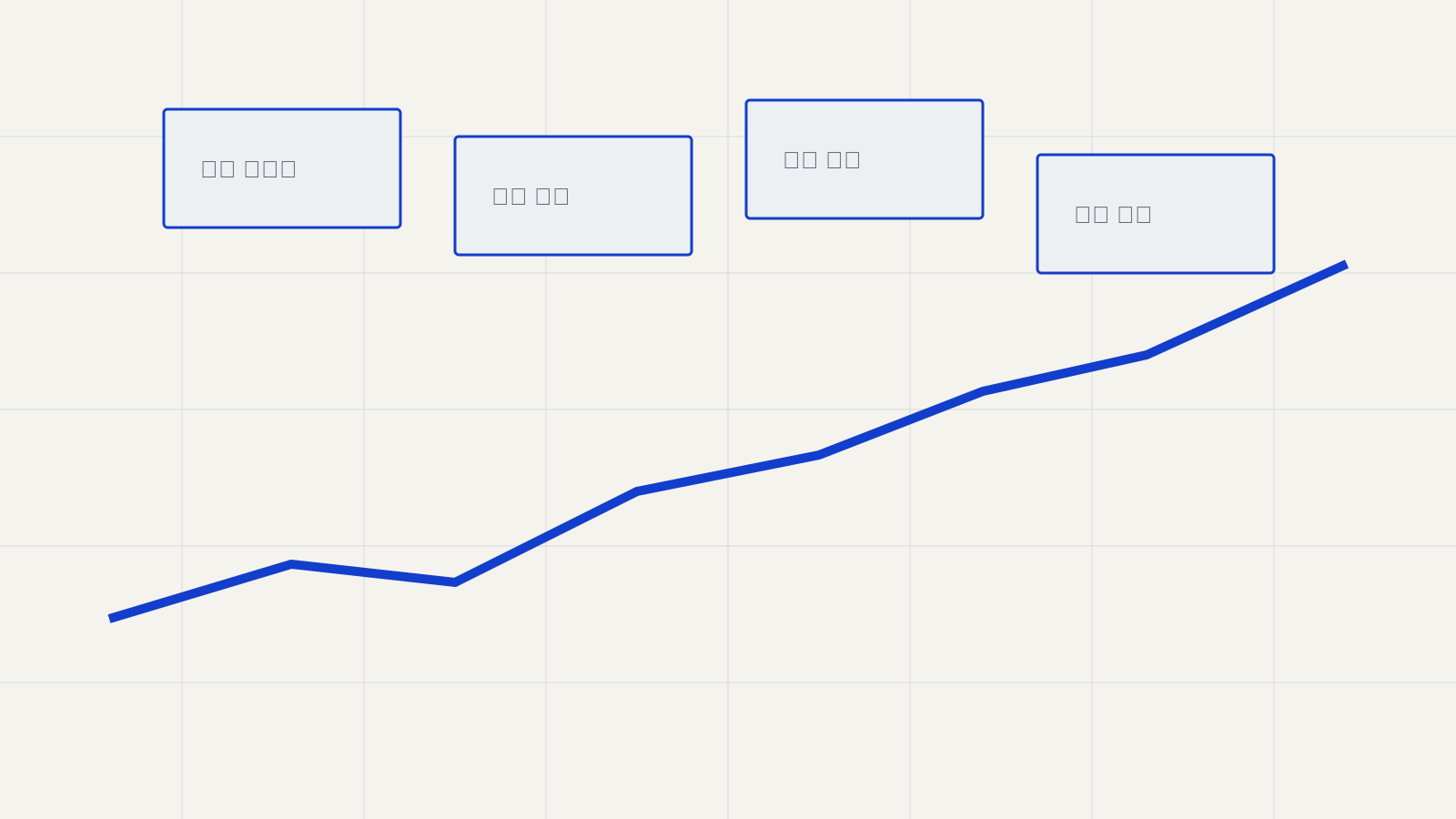 Weekly maintenance dashboard with trend lines and review cardsView original
Revenue Stability Comes from Maintaining Existing Assets, Not Producing More
Understanding passive income merely as a system where money arrives automatically inevitably leads to a trap. Automatic means fewer repeated decisions more than taking your hands off completely. Automation is not synonymous with neglect. The better automated the system, the clearer its review criteria must be.
My recommended weekly loop is uncomplicated. Look at just four measures.
- Traffic retention: This week’s traffic relative to the previous 4-week average
- Conversion density: Actual purchases or subscriptions relative to clicks
- Drop-off point: Whether departures concentrate on the product page, just before payment or just after downloading
- Support friction: Recurring issues such as refunds, inquiries and repeat-download requests
These four measures reveal different layers. Traffic retention shows whether market interest holds; conversion density indicates whether messaging remains effective; drop-off points locate structural friction; support friction exposes hidden losses in user experience. The goal is not lengthy analysis but comparison using the same criteria every week. Repeated comparisons reveal patterns, and patterns accelerate responses.
Many operators make a mistake at this stage: spotting a problem triggers a major overhaul. Large changes make causes harder to identify, because improvements and increased losses cannot easily be separated. The weekly loop therefore follows one principle: Change a little, measure briefly and record immediately. Replace only the product page’s opening paragraph and watch for 7 days. Change only the thumbnail tone and watch for 7 days. Change one CTA sentence and watch for 7 days. That makes improvements replicable.
 Cards aligned on a grid board with small improvement arrowsView original
Weekly Reviews Design Recovery Speed Rather Than Merely Find Problems
The real competitive difference in passive income lies in recovery speed rather than peak revenue. Everyone encounters slow seasons, platform policy changes and shifts in search visibility. The question then is “How quickly do we enter the recovery routine?” rather than “Why did revenue fall?”
To accelerate recovery, reserve a review slot in the weekly calendar. For example, fix 90 minutes on Sunday morning.
- Save a snapshot of last week’s key metrics
- Select just 3 assets and inspect their condition
- Schedule just 1 improvement experiment
- Record the experiment in a single sentence
The key is selecting fewer assets, not examining more numbers. Touch too many at once and attention scatters while execution drops sharply. Review only 3 each week, however, and you actively manage more than 150 assets in a year. That is how an entire portfolio gradually improves without a grand project.
The review loop must also include a decision to retire assets. Some long-held assets may have structurally low profitability. Boldly repositioning them into bundles, turning them into free lead magnets or closing them reduces upkeep and improves focus. Passive income is a game of increasing density rather than sheer volume.
Finally, record findings in operational language rather than emotional language. Replace “The response has been poor lately” with “Above-the-fold landing click rate: 2.8% → 1.9%; headline A/B test needed.” More precise sentences speed the next action, and faster action shortens the decline in revenue.
 A layered pipeline diagram cycling through maintenance, recovery and repositioningView original
Those Who Last Care for Assets Better Rather Than Merely Making More
When starting passive income, we tend to fixate on the first earnings. That stage is necessary. But staying in the same mode after reaching a certain scale quickly roughens the portfolio, because maintenance debt accumulates alongside new assets.
What is needed now is not a grand strategy document, but a tiny management loop repeatable next week. Once a week, at a fixed time, look at the same metrics, inspect just three assets and run just one experiment. Even someone busy with a main job can sustain that rhythm.
Revenue stability comes more from operating habits than talent. Creation makes starting possible; maintenance makes continuation possible. What ultimately turns passive income into a true asset is the accumulation of inconspicuous weekly checks rather than one spectacular hit. Starting this week, reserve time for caring for what you already own alongside time for making more. That single slot may reduce next month’s volatility more than you expect.
One addition makes the loop stronger: connect review results to the next production queue. Many people keep inspection and creation separate, so discovered insights never reach production. Instead, immediately after a review, write one line naming next week’s top production priority. Management and production then become one flow. If a template attracts repeated questions, the next creation task may be a better guide, not another template. If a stock asset’s particular color tone converts well, the next output may be a derivative set in that tone rather than a completely new category. Connecting them keeps energy from scattering.
The operator’s own energy management must also enter the structure. People managing passive income often believe only the system needs care and overlook their own accumulating fatigue. The more tired we are, the more we stick to familiar tasks and postpone important decisions. Add a one-line energy check to the weekly loop. “Cause of slower decisions this week: lack of sleep / too many meetings / excessive context switching” is enough. Accumulated records help separate market causes, operational causes and personal condition much faster. Systems ultimately run on people. If the operator collapses, automation cannot last either.
Finally, remember that the weekly loop aims for predictable progress rather than perfect control. Some weeks, experiments fail; in others, metrics barely move. But a living loop keeps the next action moving. Long-term passive-income results come from uninterrupted repetition more than a single success. It is fine for this week’s checklist to look small. Those who consistently make small weekly checks ultimately create steadier cashflow.