"Make it once, and it sells while you sleep."
That sentence captures the attraction of digital products. Half of it is true.
The other half leaves out what happens after the sale.
It Does Not Die; It Cools
Leave a finished product alone and it slowly stops selling.
It does not die suddenly. That is the danger. Today is a little lower than yesterday, this month a little lower than last month. By the time you notice, months have passed.
The paths of cooling are usually predictable.
The content ages. Screens change, menu names change and features disappear. One screenshot from an old version makes buyers doubt everything else.
Reviews say so first. "It does not match the current version." That single line keeps reducing later sales. Buyers trust it more than the description I wrote.
Competing products get updated. Even if mine stays the same, it becomes relatively older. Standing still, it falls behind.
It drops in search. Pages without updates lose exposure over time.
Inquiries go unanswered. Once the impression of an unresponsive seller sticks, recovery is difficult.
None of these five means the product is bad. They mean it has not been maintained.
Put Maintenance Inside the Product
We can change perspective here: treat maintenance as part of the product, rather than a cost.
"Updated as of September 2026."
That single line changes the purchase decision. The same content looks like a living product, because it signals that the seller is still here.
Go further, and updates themselves become a reason to buy.
"Updated to the latest version every quarter, with continued access to updates for buyers."
This is a promise, rather than an added feature. And a promise raises the price.
There is another side effect: a promise of updates creates a reason to return. It opens a path for someone who bought once to come back, and a place to tell them about new products.
Once a Quarter, 30 Minutes per Product
Maintaining several products alone becomes burdensome. It must be designed minimally to last.
Once a quarter, 30 minutes per product. That is enough.
1  Screenshots and screen descriptions    Replace anything changed; these age most often.
2  Links                                  Dead links immediately undermine trust.
3  Reviews and inquiries                  Repeated questions belong in the product.
4  Update date                            Advance it when checked, even if nothing changed.
Do not dismiss the fourth item as a formality.
The fact that you checked is itself information. Buyers want to know, “Is this person still looking after this?”
What Will You Not Update?
Trying to maintain everything wears you out.
Maintain only products that continue selling. A product with no sales for 6 months is a candidate for retirement, not an update. It can be taken down.
The common mistake here is “Leave it up; maybe it will sell someday.”
Leaving it appears free, but has a cost. A longer list blurs maintenance decisions, and one outdated product diminishes the impression of the whole brand. Visitors do not evaluate products individually; they see the list all at once.
A Cycle with Direction
The difference between maintained and neglected products widens over time.
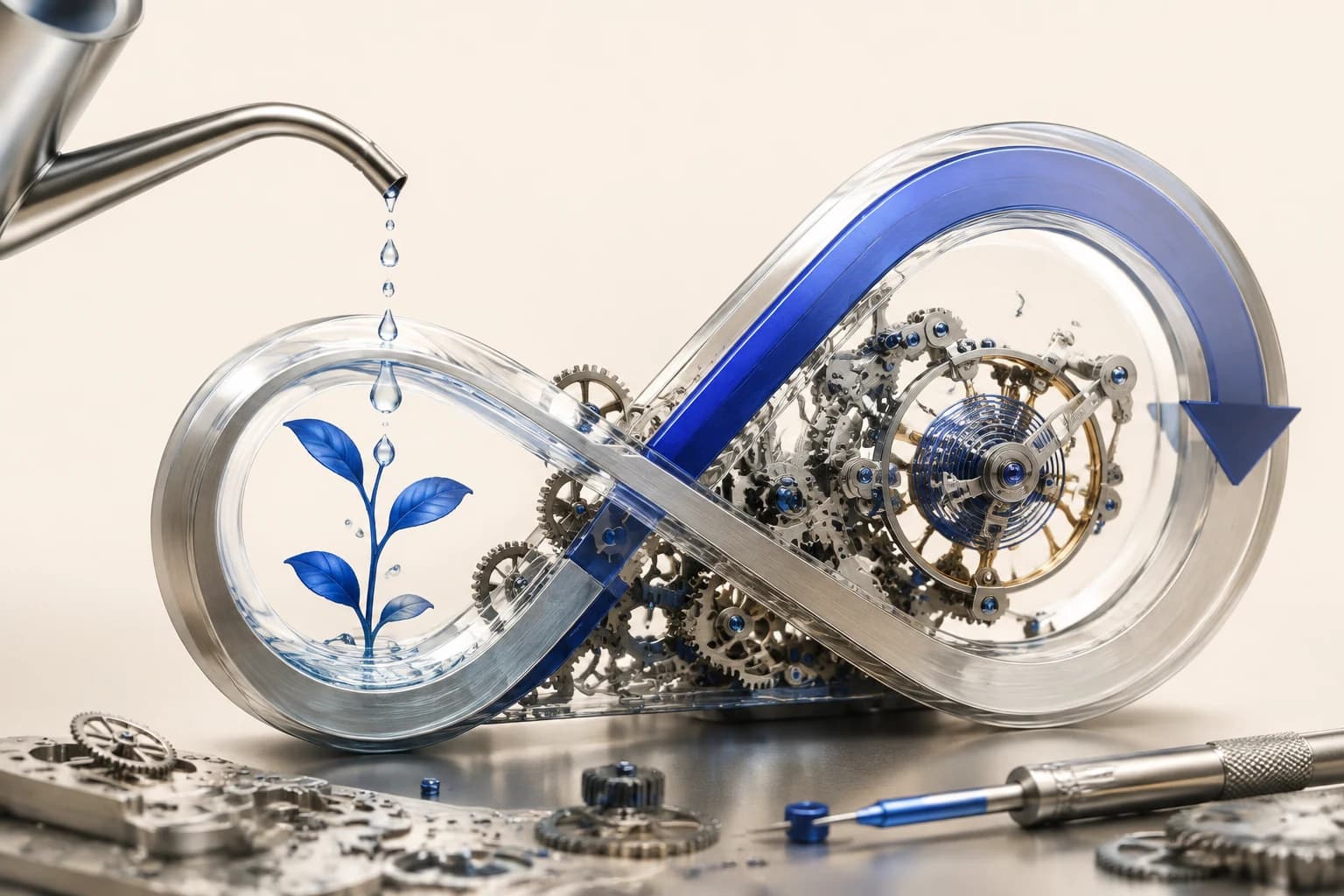
Maintained products earn better reviews. Better reviews sustain exposure; sustained exposure brings continued sales; continued sales give a reason to update. The cycle turns.
Neglected products turn just as quickly in the opposite direction.
When the same product in the same market has a different outcome a year later, the direction of this cycle is usually why.
The Work That Begins After the Sale
Digital products are attractive because the cost of making them comes once. That is true.
But selling costs more than once. Another name for that cost is maintenance.
30 minutes a quarter: the price of selling while you sleep. It is cheaper than you might expect.