Passive income is less a state of ‘money arriving while you do nothing’ than a system designed to keep sales flowing with small amounts of maintenance.
1. Revenue Fluctuates Because Operations Break Down, Not Because of the Product
When sales of a digital product flare for 1–2 months and then fade, quality is often not the problem. Usually, operations have stopped. At launch, there is intensive promotion; when sales come in, relief sets in; then the creator moves straight to making the next item. From the outside, this looks industrious, but the conversion path for the existing product gradually dries up. Landing page copy grows stale, FAQs drift away from actual inquiries, and new testimonials accumulate without being repositioned. The product remains alive, but its revenue line dies.
This calls for a change in perspective. A digital product is not a ‘finished item’ but an ‘asset in operation.’ Creating and uploading a file is the beginning, not the end. You need to track where traffic came from, which sentence prompted visitors to leave, and when after purchase an offer for the next product is naturally welcomed. As this information accumulates, the direction of production changes too. Instead of adding features indiscriminately, you first improve the elements that directly influence purchase decisions.
In practice, dividing a product page into three sections makes it easier to manage. First, problem recognition: why is this needed now? Second, usage outcomes: what changes after applying it? Third, getting started: is it easy to begin right now? Updating these three sections regularly helps conversion rates hold up even in weeks with little new traffic. Sales volume is a function of traffic, but also of wording and structure. Teams that keep operating ultimately earn from the same product for longer.
 Evergreen operating loop 1View original
2. Build an Evergreen Structure from an Entry Product, a Core Product, and Maintenance Signals
The most effective basic structure for sustained sales has three elements: a low-priced entry product, a core product that drives revenue, and maintenance signals. The entry product lets customers experience solving a problem with little risk. The core product does the main work of actually saving time and producing results. Maintenance signals provide evidence that the product remains alive after purchase. When these three work together, the business moves from individual transactions to repeat revenue.
What matters in an entry product is not ‘cheap’ but ‘quick to apply.’ It needs a structure that lets buyers begin within 10 minutes of purchase. For a template, retain only essential input fields and reduce unnecessary choices. For a checklist, provide the first week’s execution routine immediately. Give customers an early success with the entry product, and they naturally move up to the core product without a long explanation.
The core product should demonstrate how results are designed, rather than how many features it has. For example, ‘a process that reduces the risk of missed deadlines from 3 times a week to 0’ is far stronger than ‘8 automation buttons.’ Customers appear to be buying a tool, but they are actually buying less anxiety and reclaimed time. Accordingly, a detail page tends to convert better when built around comparisons of workflows before and after use, application examples, and failure recovery scenarios, rather than specification tables.
Small updates are enough to provide maintenance signals. Examples include monthly template version notes, FAQ additions based on actual inquiries, and guides addressing the TOP 3 usage mistakes. These signals reduce churn among existing buyers and reassure new visitors that this is a ‘maintained product.’ To escape price competition, you need to build trust in your operations.
 Evergreen operating loop 2View original
3. Automation Lasts When Designed to Reinforce Trust, Rather Than Replace Advertising
When people hear ‘automation,’ many first think of sending messages. But automation that delivers over the long term focuses on improving contextual quality rather than sending volume. A structure that delivers exactly the information a customer needs at their current stage is much stronger than one that broadcasts the same 5 emails.
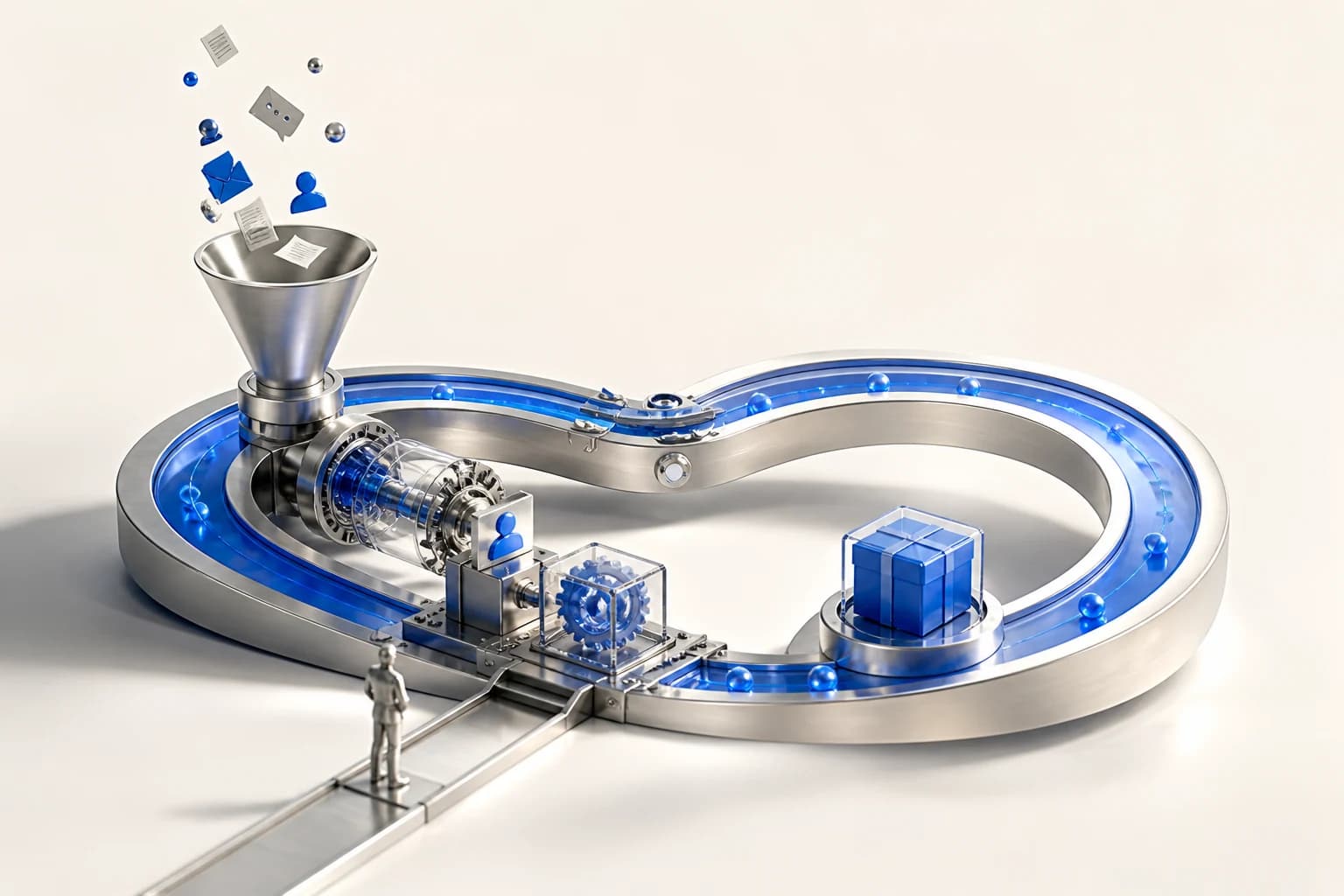
The recommended basic loop is simple. First, at the acquisition stage, provide content with a clearly defined problem. Second, at the lead capture stage, offer a mini sample or diagnostic checklist. Third, during onboarding, automate brief guidance through installation, application, and confirmation of the first result. Fourth, during ongoing operation, deliver update news separately from expansion offers. Fifth, at the repeat purchase stage, present an upgrade path aligned with existing usage data.
The key lies in the warmth of the automated wording. Repeating only ‘Buy now’ builds fatigue. Reflect the actual context of use instead—‘Check whether this was the step you got stuck on last week’—and the message is received as guidance. Automation cannot replace human trust, but it is extremely powerful at helping preserve it.
Run this loop consistently for just 4 weeks, and noticeable changes emerge. Purchase conversion stabilizes even without an increase in new traffic, existing customers return more often, and the quality of inquiries improves. This is the realistic definition of passive income: instead of abandoning a product once it is made, inspect it in small increments and improve it precisely, building a revenue structure that becomes less volatile over time. Operations are harder than production, which is why they create a barrier to entry—and why their benefits compound.
 Evergreen operating loop 3View original