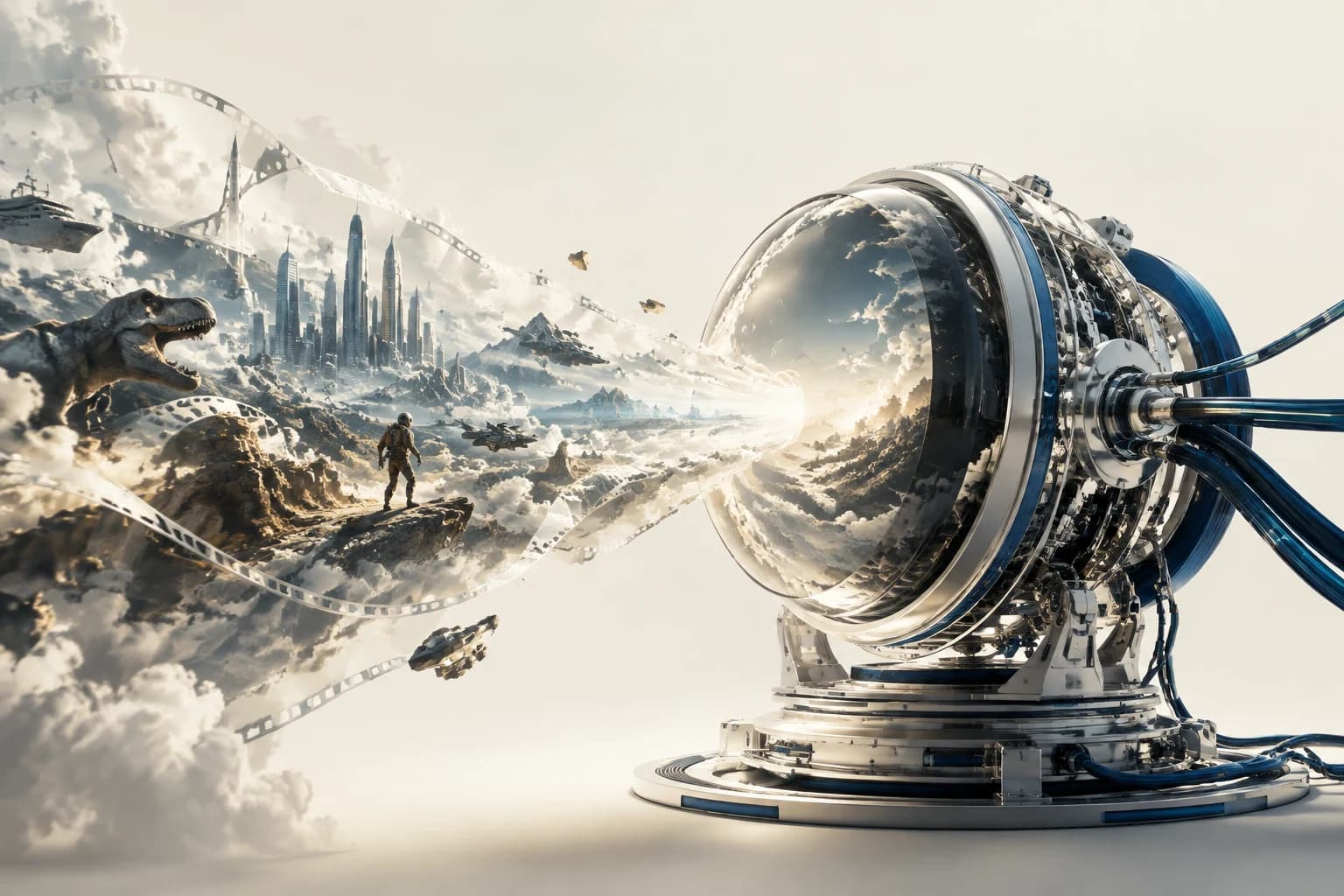
When the Lumière brothers first screened 'Arrival of a Train' in the basement of the Grand Café in 1895, audiences screamed and ran outside, fearing the train on the screen would run them down. Some 130 years later, we are witnessing another startling arrival: Text-to-Video AI models such as OpenAI's Sora and Runway's Gen-3.
A few lines of text can now create a Hollywood blockbuster-level scene in just minutes: battle scenes that once required thousands of extras, science-fiction settings that demanded expensive sets, and creatures that exist nowhere in the world. A single instruction called a prompt handles all of it. Beyond an improvement in filmmaking tools, this represents a revolution in the grammar of moving images itself, from Shooting to Generation.
Synthetic: Imagine → Generate → Refine
1. Beyond the Uncanny Valley: Immortal Virtual Actors
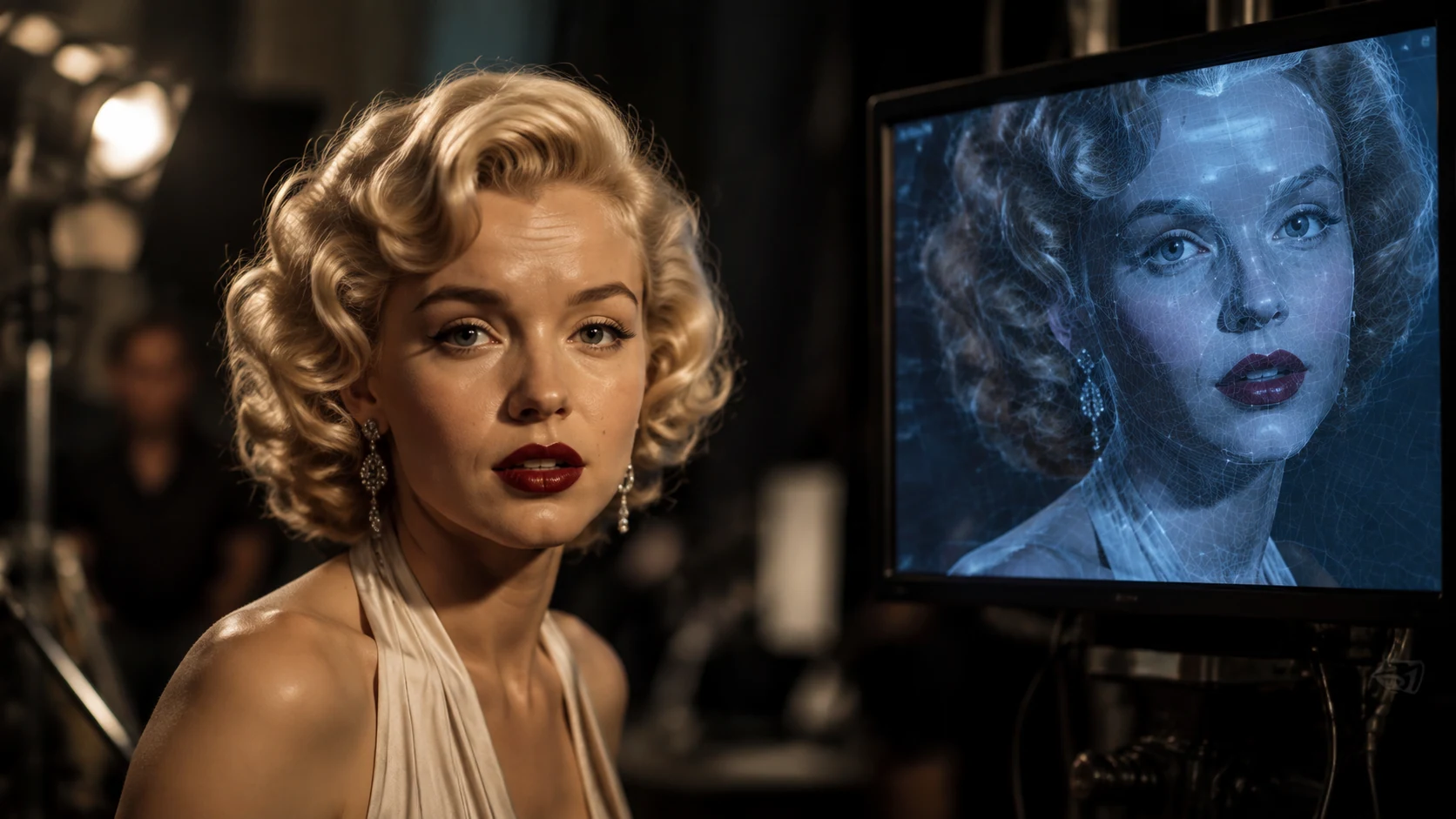
Computer-generated humans once looked awkward and disturbing. Their eyes were empty, their skin plastic. The so-called 'Uncanny Valley' seemed an insurmountable technological barrier. Advances in deepfake technology and the arrival of generative AI, however, have crossed that valley in a single leap. AI actors now perfectly reproduce pores, tiny facial muscle tremors and lighting reflected in pupils.
This heralds enormous change for the film industry. An actor's scandal will no longer indefinitely postpone or cancel a release. Actors who never age, never tire after 24 hours of filming, and speak every language like a native have arrived. We have already seen a young Harrison Ford appear in Indiana Jones. Before long, James Dean will be cast as the lead in a 2026 film, and a Marilyn Monroe in her twenties will return to the screen in 4K.
What, then, is the essence of an actor? The concepts of likeness rights and acting are being completely redefined. Stars will become 'IP owners,' earning vast sums by licensing data of their appearance and voices. Acting may become a process of tuning and curating data rather than finding an emotion on set.
2. The One-Person Studio
Traditional filmmaking required immense capital and labor. Without tens of billions of won, hundreds of crew members and complex distribution networks, a film could not reach a theater. AI, however, has broken that solid entry barrier. You brainstorm a screenplay with an LLM such as Claude or GPT, draw storyboards in Midjourney, generate footage in Sora, and let Suno compose the score.
Just as YouTube transferred broadcasting power from television stations to individuals, generative AI is creating a 'second media revolution' by handing filmmaking power to individuals. What matters now is the scale of imagination, not capital. An era has arrived in which anyone with an original world in mind can create a Netflix-caliber series from their room. Beyond short-form challenge videos, we will soon witness the historic moment when a 90-minute AI-generated feature wins the Palme d'Or at Cannes.
🎬 Synthetic Cinema Evolution
- Phase 1:Assistive Tool
Supporting roles such as streamlining VFX, noise reduction, automatic subtitles and cut editing. - Phase 2:Co-Creation
Expanding backgrounds with Generative Fill, replacing ADR with AI Voice, and generating B-Roll from text. - Phase 3:Autonomous Generation
Prompt-to-Movie. Generating and rendering a complete film in real time, integrating video, voices and music from an input screenplay.
3. Interactive Movies and Personalized Endings
Netflix's 'Black Mirror: Bandersnatch' demonstrated the potential of interactive films with endings that change according to viewers' choices. But it amounted to branching together prerecorded clips. Interactive movies in the AI era operate on another level. A film is no longer a fixed, fully rendered MP4 file. Like a game engine, it is an experience generated in real time in response to the viewer.
“Is the ending where the protagonist dies too sad?” Tell the AI, and a version in which the protagonist survives and takes revenge is immediately generated and played. Audiences move from passive observers to active participants and, eventually, co-creators. My horror film consists of the things I unconsciously fear most, while my romance features actors who match my ideal type.
This is the end of Mass Culture and the beginning of extreme Micro Culture. Yet concerns follow. In a society without shared stories such as 'Squid Game,' which excite and move people around the world at once, how will we find common ground with others? Might everyone become isolated inside a filter bubble of their own tastes?
Conclusion: What Remains Is the Essence of Creativity
Paradoxically, the more technology advances, the more valuable the human becomes. When AI provides perfect lighting, composition and flawless CG, audiences crave authenticity beyond the pixels even more. Stories that carry a director's intense deliberation and move the soul, however rough their edges, will become more precious than mechanical perfection.
Future film directors will be thinkers who offer a vision the world has never seen, rather than technicians who make footage. AI can propose thousands of excellent scenes, but deciding which one will move the audience—curating—remains a human task.
Cinema is not dying. It is merely shedding its physical body, the camera, to be reborn with a soul of data. The screen is becoming a mirror rather than a projection surface, beginning to reflect our boundless imagination in real time.