What a $3 PDF Really Sells
At 9:47 on a Sunday night, a teacher bought a reading log from an Etsy shop. Eleven days later she came back for four more files and sent an email asking whether the writing lines could be a little wider. The seller widened them, and she bought the whole bundle.
Miroslav Novohradsky, who wrote the account for Design Nexus, calls her the best customer he ever had. She never left a review. This is one seller's story and it gives no sales figures. Still, it contains several scenes worth testing against your own product, so they are taken one at a time here.
 A teacher at a kitchen table at night with a laptop and a stack of printed pagesView original
She buys time, not paper
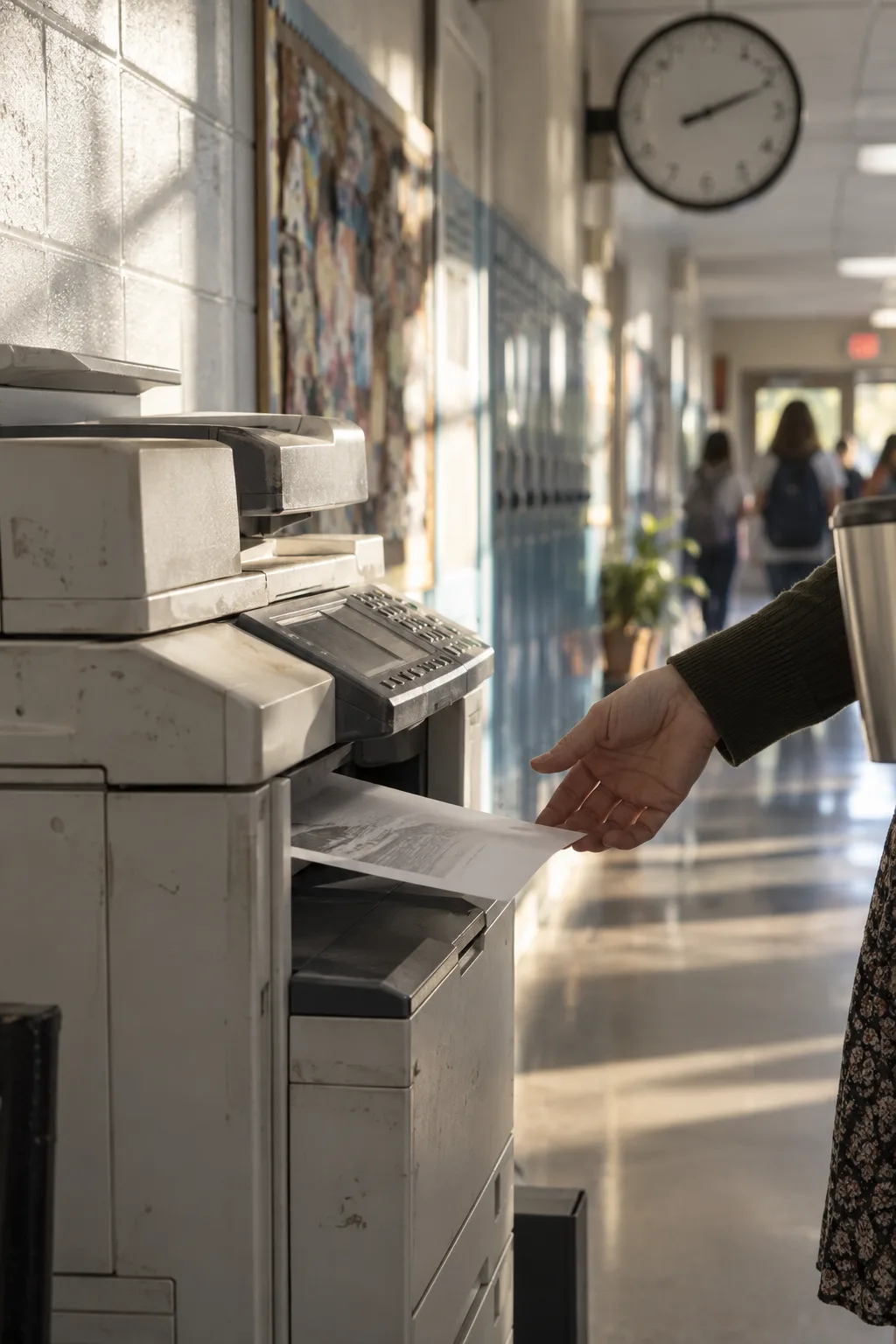
The seller's explanation goes like this. On Sunday evening the lesson plan is due and twenty-six kids arrive at eight the next morning. A clean sheet that prints on the first try costs three dollars and saves roughly forty minutes. Building the same sheet at ten at night costs far more than three dollars in tiredness.
That arithmetic is not limited to teachers. The price of a small digital product is not set by how long it took you to make. It is set by what the buyer no longer has to do. A buyer of a pretty planner is buying a mood. A buyer of a printable log is buying ten minutes tomorrow morning. The seller's observation is that the first kind of buyer rarely returns and the second does. That is a self-report from one shop, not proof about every market.
Teachers already spend their own money
It is tempting to treat teachers as a low-budget audience. In the National Teacher and Principal Survey published by the US National Center for Education Statistics (NCES), 94% of public school teachers spent their own money on classroom supplies without reimbursement during the 2014-15 school year. Among those who spent, the mean was $478 and the median $297. The data is about a decade old and covers US public schools, so it cannot be carried over to teachers elsewhere or today. It only shows that spending from a teacher's own pocket is ordinary, not unusual.
The seller goes a step further. People who pay out of pocket hate waste, because a bad download comes out of their own money first. So they are strict about files that drain ink, need an explanation, or turn out unusable. That reading is the seller's interpretation, not something the NCES numbers establish.
 A desk with tissues, glue sticks, pencils, snack bars and a paper bagView original
Why the decorated files sold less
The seller's first teacher products had rainbow borders, dancing pencils with faces, and a 140-page bundle, because he assumed more pages meant more value. Teachers printed page one, watched the pencil drawing drain the ink, and never reopened the file. One told him, politely, that in grayscale the rainbow header looked like a bruise.
What he made afterwards printed clean in black and white, put the name line where a child would see it, and needed no explanation. By his account these outsold the pretty ones every time. The customer's question was not how hard the product tried but whether it worked right then.
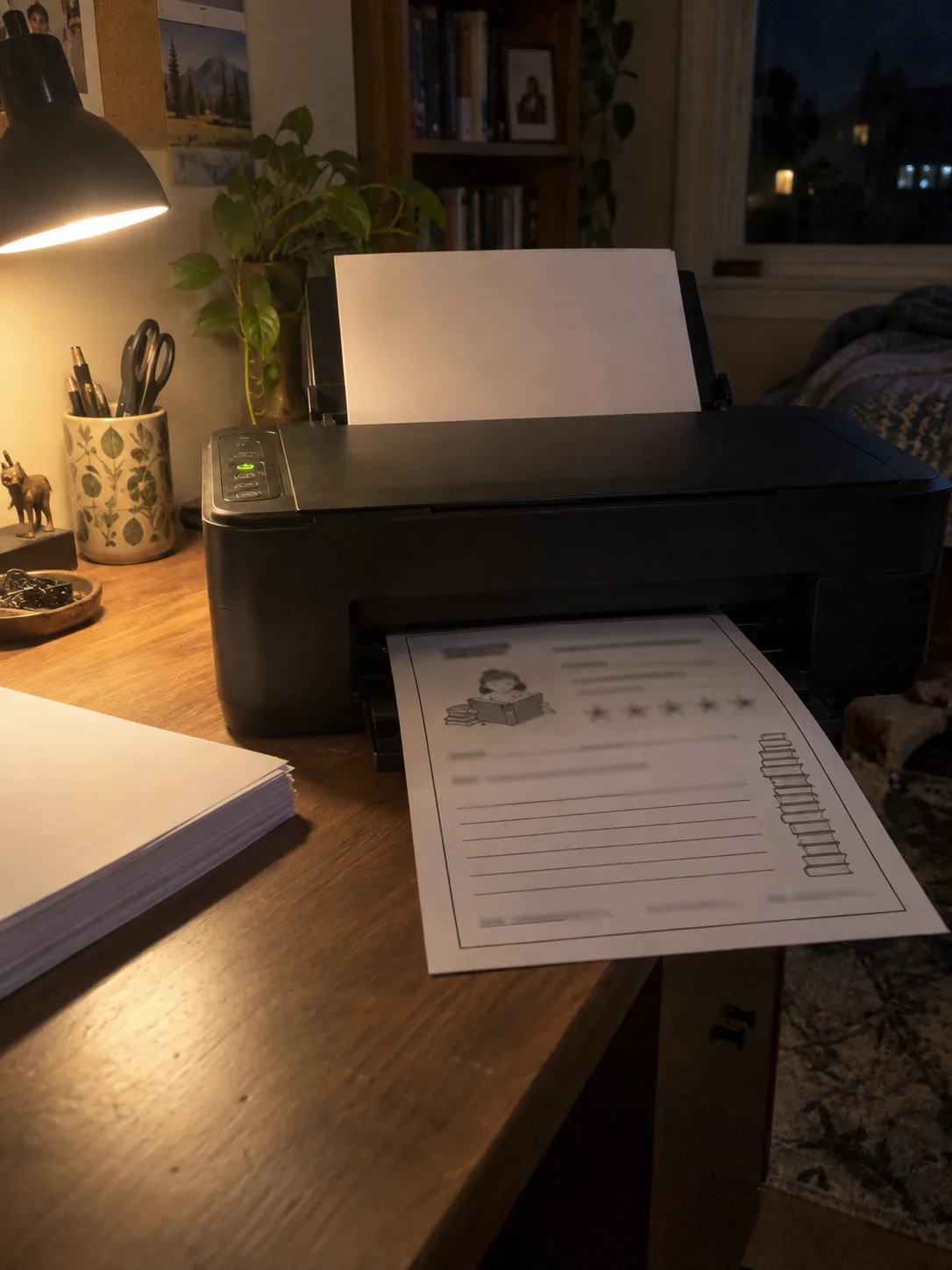 A black-and-white reading log with wide lines coming out of a home printerView original
Reputation travels fast, and so do mistakes
According to the seller, teachers pass information along through the staff room, online groups and the student teachers they mentor. A good reading log gets mentioned, and so does an answer key with a typo, often within days. So he checks the answer key twice and test-prints every new file on a cheap inkjet before it goes live. When someone emails on a Tuesday asking for wider lines, he answers even when he is tired.
For monetization this is the important part. The real cost of a small product includes checking time, test-print ink and paper, customer replies, and re-uploading fixes. Whether a three-dollar file covers those costs is something to calculate, not assume.
 Two teachers looking at a phone together at a staff room tableView original
A checklist for your own product
The point is not that teachers are a promising market. It is that one seller's lessons translate into a checklist for other small digital products. The list below is my own summary built on his account, not a procedure from the original article.
1. Picture the moment of use. Write down who opens the file, where, and with how many minutes to spare. If the answer is a relaxed weekend afternoon, polish helps. If it is nine minutes before the bell, it does not.
2. Test under the worst normal conditions. Open it in black and white, on a cheap printer, on a small phone screen, in a free viewer. If it drains ink or breaks, the buyer will leave without explaining why.
3. Check that it works with no instructions. If usage cannot be explained in one line, simplify the structure. Small placements such as where the name line sits decide most of the experience.
4. Verify answers and numbers twice. One error costs reputation, not just a refund.
5. Put reply time into your cost. Ten minutes per inquiry and ten inquiries a month is 100 minutes. Convert that to an hourly rate and compare it with your price.
6. Check fees against the current policy. Etsy can charge listing, transaction and payment processing fees, and the amounts and rules vary by country and over time. This article fixes no numbers, so open Etsy's Fees and Payments policy and calculate against today's terms.
A hypothetical calculation to see the limits
The following is an illustration, not real sales data. Suppose a file sells for $3 and platform and payment costs take 20% in total, leaving $2.40 per sale. If ten inquiries a month take ten minutes each and you value your time at $20 an hour, answering them costs about $33. You would need roughly fourteen more sales just to cover it. Time spent making new files, paper and ink for test prints, and any advertising are not included.
What this shows is that the cheaper the product, the more per-customer support time shakes the profit. A file that needs no explanation is therefore a design for the customer and also a design for the seller's cost structure. A product that keeps drawing fixes and questions is not the make-it-once product people imagine, which connects to the maintenance costs covered earlier in this series.
Before raising a price
A cheap product that sells well is not a reason to raise the price at once. The customer in this story came back not because the file was cheap but because she actually got the time she was promised. Before raising a price, look at whether the same customers have bought at least twice, where the inquiries repeat, and which files attract complaints or refunds. When building bundles, check that a single sheet earns its place before adding pages. The 140-page bundle that teachers abandoned after printing page one is the reason.
What this story does not tell you
The source is one person describing his own shop. It has no revenue, conversion rate or repeat-purchase figures. That teachers reorder more than other customer groups is the seller's observation, not a tested comparison. Selling classroom materials also brings other conditions the article does not cover, such as copyright, school usage rules and price pressure from the large amount of free material. Those need your own checking.
The seller also admits something uncomfortable. Schools leave gaps, teachers fill them with their own evenings and money, and selling to them means making a little money off that gap. He says he has not found a way around it, and that candor explains the obligation he feels: if you take a teacher's three dollars, you owe her the forty minutes you promised.
One small thing to try today
If you sell or plan to sell even one file, print it in black and white or open it on the smallest screen you own. Check whether the place to write a name or date is obvious and whether it works with no instructions. Then recall your latest customer question and write down how long it took. Those two steps alone give you material to decide whether to raise the price, simplify the file, or put the instructions inside it.
Sources: Miroslav Novohradsky