This article is based on a piece I found on Medium, tested myself and adapted to a Korean context.
Last year, I generated a thousand songs with Suno.
For the first month or two, I simply gave it instructions without much thought—whatever came to mind, however it came out. I uploaded tracks to DistroKid and tried earning revenue while collecting various insights along the way.
But at some point I started approaching it differently. Why is that happening... what makes it sound this way? Thinking through each problem, making adjustments and trying again gradually brought me closer to the sound I wanted. ^^
Take your time reading, and listen to the sample music included along the way 🎵
Why the Prompt Is Everything
Suno does not read a mood; it responds to specific language. Ask vaguely and it answers vaguely.
A real producer does not walk into a studio and say, "Make it good." They say, "Keep the 808 warm, sit the vocal in the midrange, use brushes on the snare, and let the reverb tail bleed naturally into the chorus."
That is exactly how you should speak to Suno. Like an engineer.
Prompt 1. Late-Night R&B
Soulful R&B, slow tempo 68 BPM, breathy female vocal with light vocal fry,
warm Rhodes piano, soft 808 bass, hi-hats panned left,
reverb-heavy background harmonies, late-night intimate mood,
professional mix, Korean late-night radio feel
Specifying the BPM, vocal texture and instrument placement produces a completely different level of density than entering only "R&B." Adding "Korean late-night radio feel" or "Seoul midnight vibes" at the end subtly changes the atmosphere again. Compare them and you will hear the difference immediately.
Prompt 2. Korean Hip-Hop — A Heavy Beat
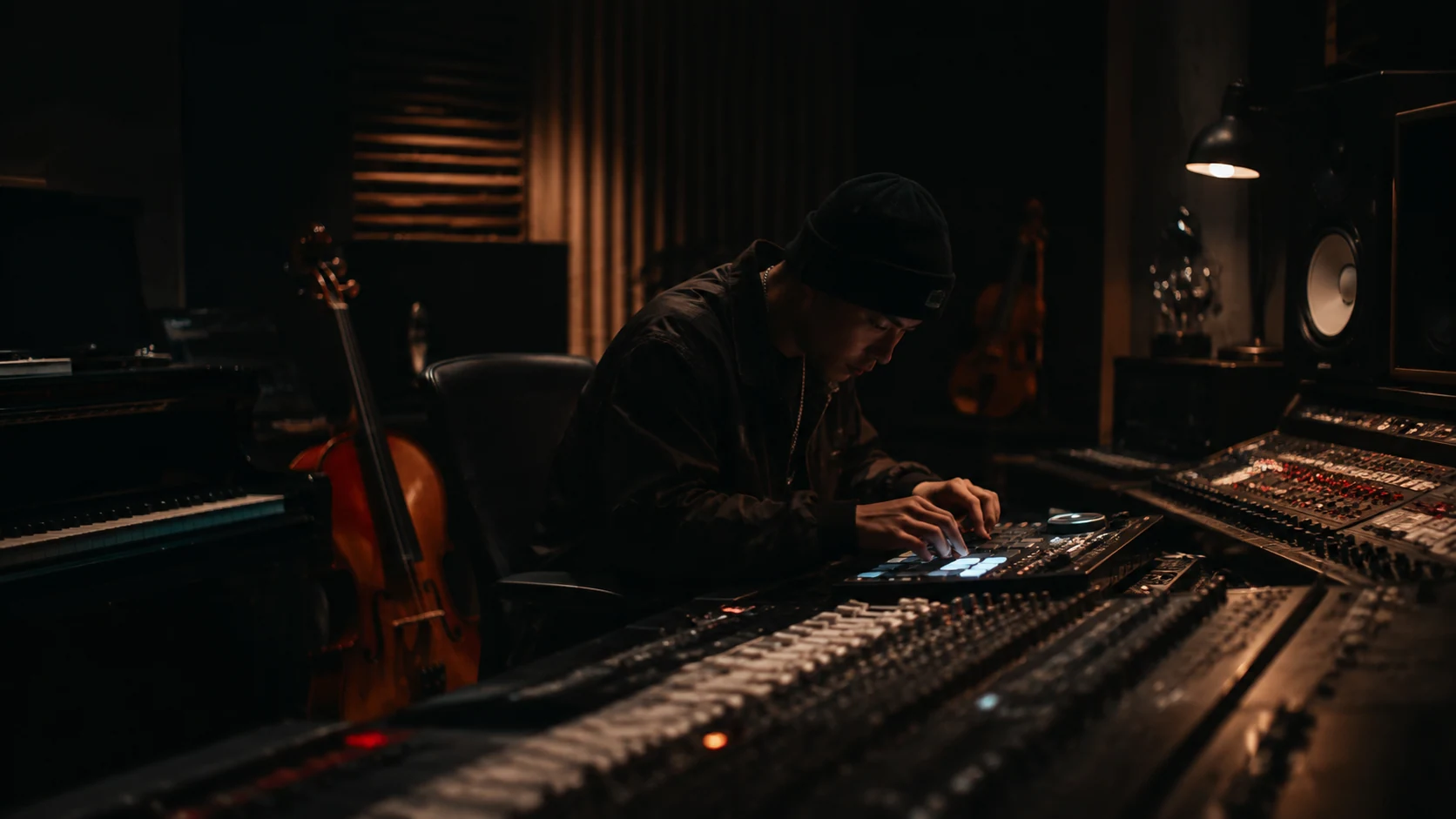 Korean hip-hop producer’s studioView original
Dark Korean hip-hop, 90 BPM, heavy 808 sub-bass,
orchestral string stabs, distorted vocal chops as a hook,
punchy trap hi-hats, dramatic build before the drop,
moody introspective tone, mastered sound,
influenced by Korean underground hip-hop scene
With only "Dark" or "Cinematic," Suno retreats to a safe average. Specify "Orchestral string stabs" together with "808 sub-bass," and it actually creates that tension. Naming a regional scene, such as "Korean underground hip-hop scene," is also more effective than you might expect.
Prompt 3. Korean Indie Pop — Radio-Ready
Korean indie pop, 120 BPM, male vocal with light rasp,
fingerpicked acoustic guitar intro transitioning to full band,
layered gang vocals on the chorus, tambourine,
warm analog production, emotionally nostalgic,
radio-ready mix, reminiscent of Korean indie scene
"Radio-ready" is a trigger phrase. Including it produces much cleaner, more balanced output. Specifying "layered gang vocals" for the chorus noticeably thickens it. For a Korean indie-band sound, the combination of "warm analog production" and "emotionally nostalgic" is key.
Prompt 4. Café Jazz — Sunday Morning
Smooth jazz, 75 BPM, upright bass walking line, brushed snare,
muted trumpet melody, warm vinyl crackle in the background,
Sunday morning mood, no lyrics, live session feel,
Korean cafe background music atmosphere
The combination of "No lyrics," "live session feel" and "vinyl crackle" asks Suno for texture rather than performance. The results are polished enough to fit naturally on a streaming platform, and are also suitable for YouTube café-music or ASMR channels.
Listen to the sample track below. It was generated with this prompt.
Café Jazz Sample — Generated with Suno AI
Smooth jazz, 75 BPM, vinyl crackle, live session feel
Prompt 5. K-Ballad — The Moment Emotion Breaks Through
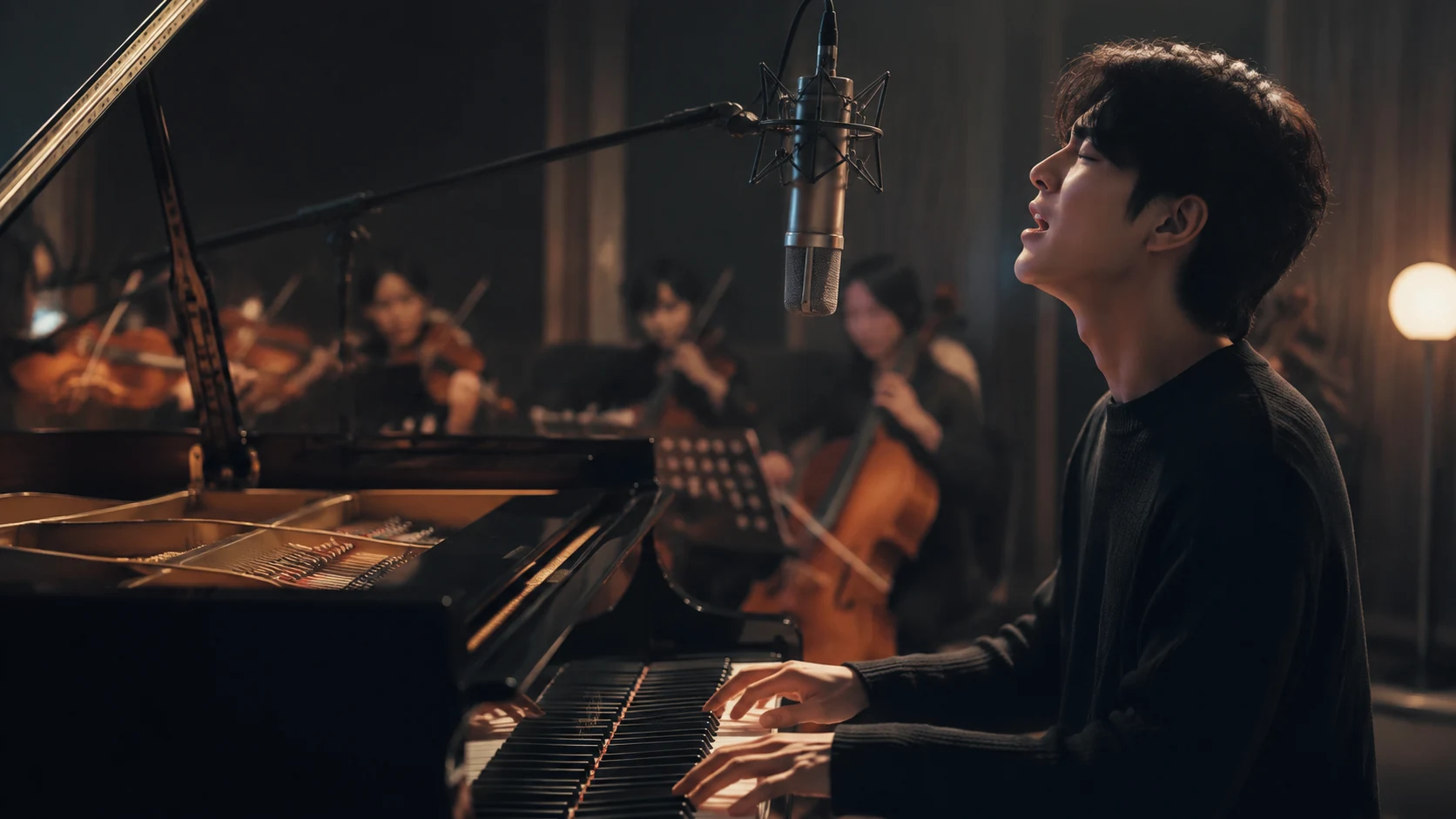 The piano atmosphere of a K-balladView original
Korean ballad, slow 58 BPM, emotional male vocal with slight crack on high notes,
piano-led arrangement, orchestral strings swelling in the chorus,
subtle snare brush, building dynamics from verse to bridge,
raw vulnerable feel, professional Korean ballad production style
K-ballad is a genre for which Suno has substantial training data. The regional style specification "Professional Korean ballad production style" actually works. Defining a vocal’s emotional texture precisely, as in "Slight crack on high notes," transforms the feeling of the result.
Prompt 6. Minimal Acoustic — The Feel of a Solo Recording
Acoustic singer-songwriter, slow 55 BPM,
intimate vocal with slight crack on emotional lines,
single acoustic guitar fingerpicking, very subtle cello underneath,
no drums, raw and vulnerable feel,
recorded in a small room, close-mic intimacy
Restraint is the strongest weapon. Most people put in too much. This prompt strips everything back. "Recorded in a small room" is a secret weapon for reducing the overprocessed feel characteristic of AI music. I was quite surprised the first time I used it.
Prompt 7. EDM Anthem — Club-Ready
Progressive house, 128 BPM, euphoric female vocal hook,
massive layered synth chords, punchy sidechain kick,
tension-building 8-bar breakdown, emotional release drop,
festival-ready production, crystal clear master
Structure is everything in dance music. Explicitly specifying "8-bar breakdown" and "emotional release drop" makes Suno reproduce the structure of a real EDM track. "Crystal clear master" consistently improves the finishing polish.
Remember Just Three Principles
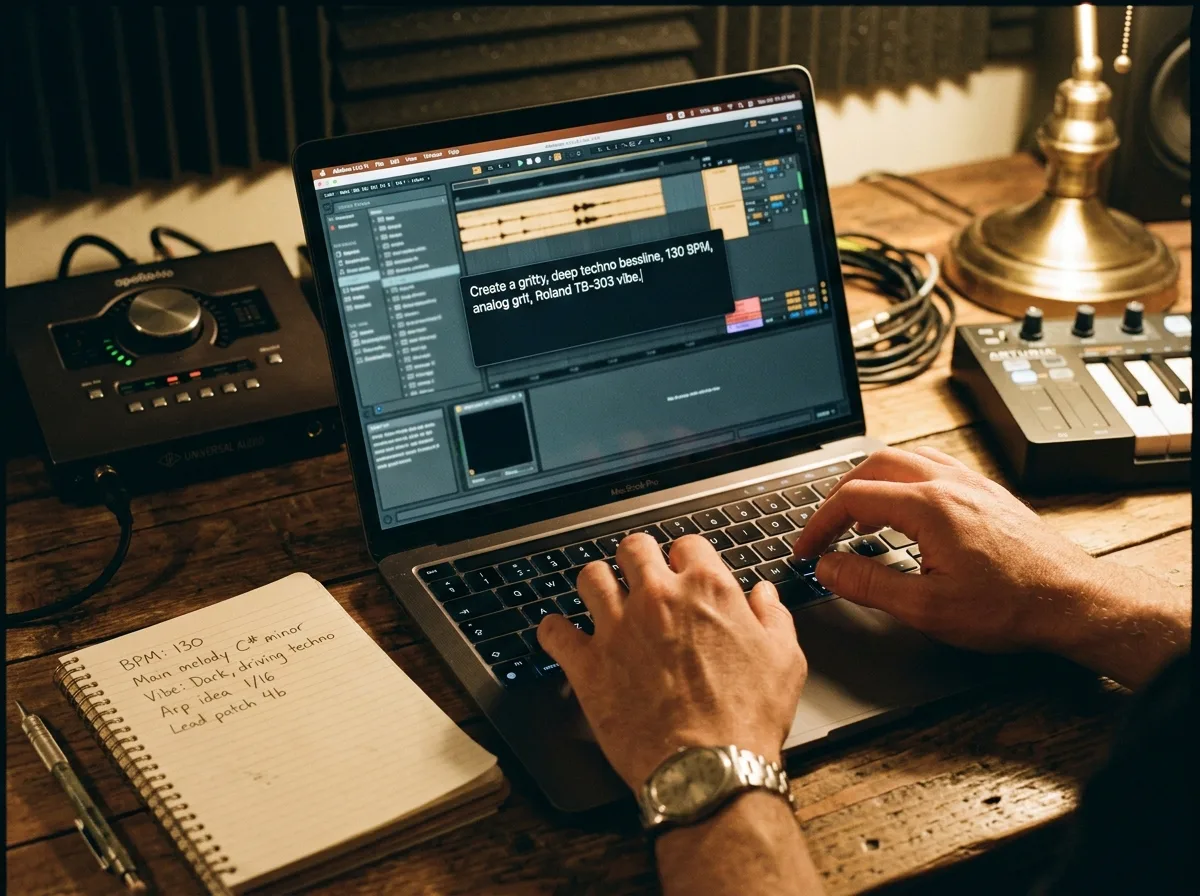 Principles for writing promptsView original
1. Always Include the BPM
BPM anchors the rhythm. Without it, the result drifts wherever it wants.
2. Describe Texture, Not Just a Genre Name
"warm Rhodes piano" is always better than "R&B." "808 sub-bass with orchestral strings" guides Suno far more precisely than "hip-hop."
3. Add a Production-Quality Cue at the End
professional mix, mastered sound, radio-ready, crystal clear master — these phrases tell Suno to "come out well dressed." The results really do differ with and without them.
Closing Thoughts
What I learned from making a thousand songs is that finding the why in one track is ultimately faster than simply making more.
This article contains some of what I gathered in that process. I will keep organizing and sharing more. First, choose one prompt above and enter it exactly as written. It will certainly sound different from your usual results.