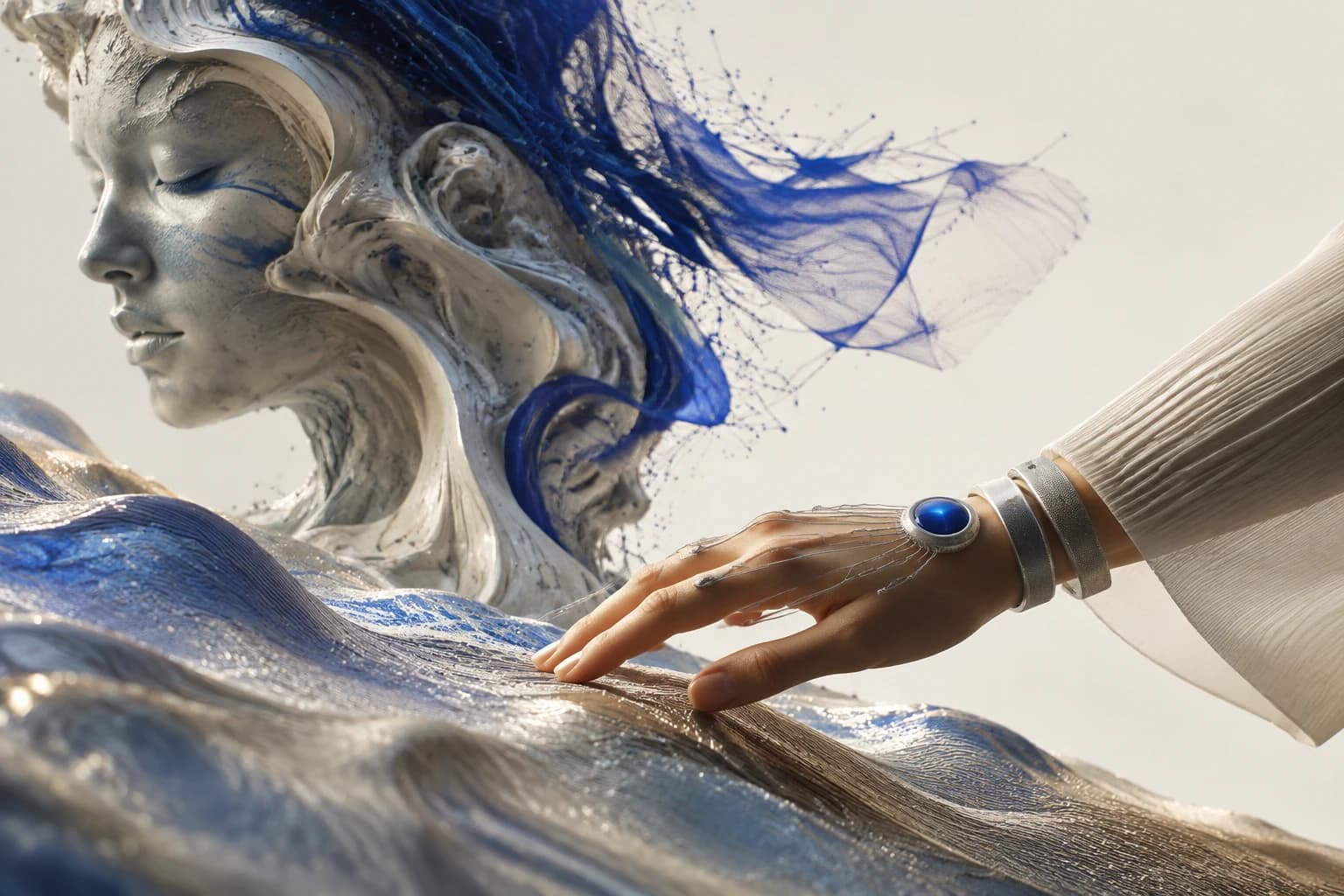
For a long time, we learned art through our eyes. We spoke first of composition in a good painting, and of framing and editing in a good film. Emotional impact usually began with our gaze. But now, very quietly, the center of artistic experience is shifting. Art is emerging that goes beyond ‘seeing’ an image on a screen to ‘touching’ it through tactile signals such as vibration, pressure, resistance, and temperature.
Haptic interfaces are no longer accessories to game controllers. The moment AI analyzes the emotional density of a scene and synthesizes matching tactile patterns in real time, touch becomes part of the work itself, like a soundtrack. A palm cooling slightly during a scene of grasping a cold metal railing, or a faint rise in fingertip pressure as a character holds their breath, is more than a staging effect. It transforms the audience from outside observers into companions within the work.
1. Beyond the Age of Sight, toward a Language of Touch
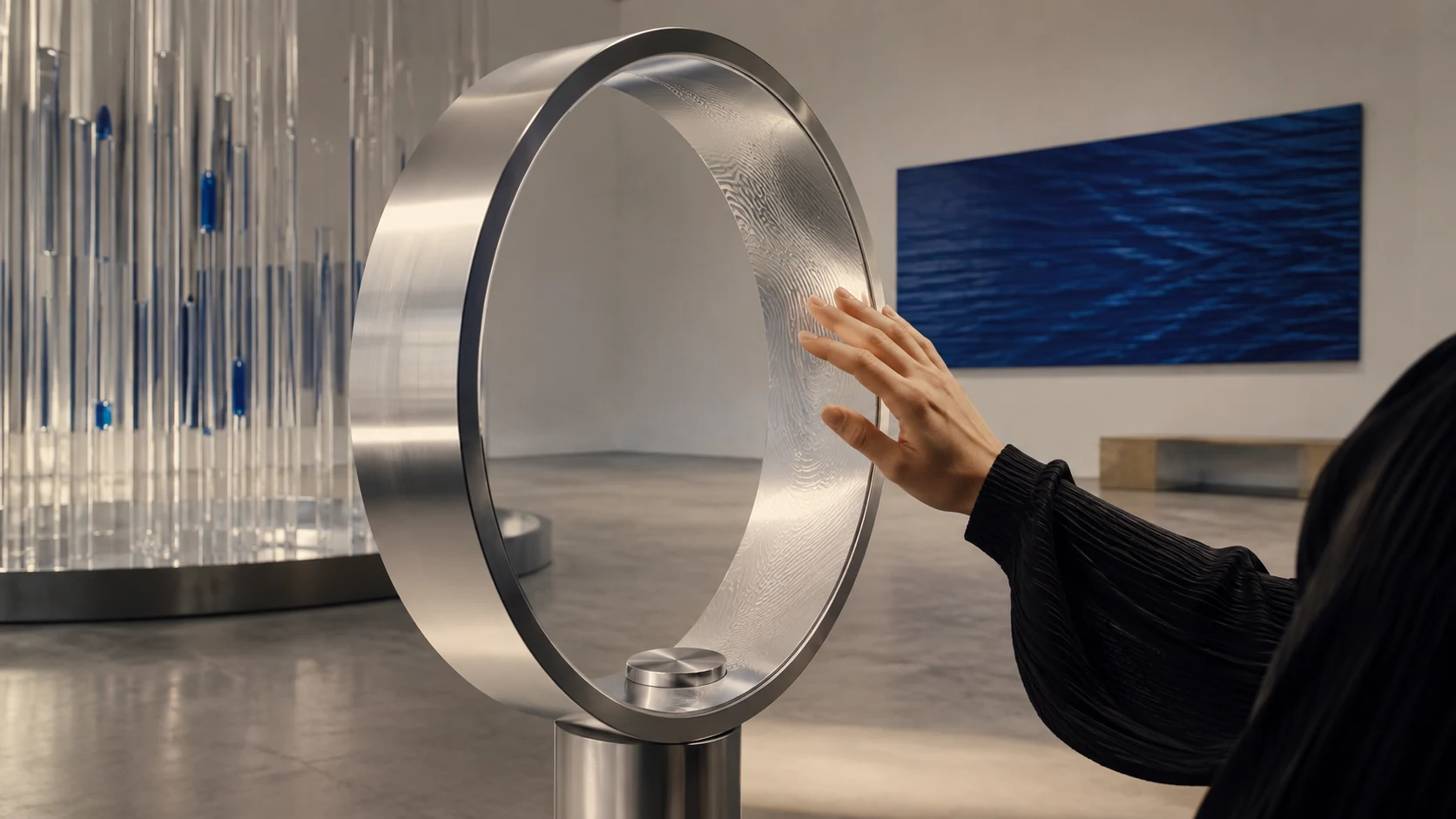 Haptic art immersion 1View original
This raises an important question: how far do the boundaries of an artwork extend? In the past, the canvas, screen, or stage marked those boundaries. Now the audience’s body enters them. Alongside AI-generated images and sound, the rhythms delivered to an audience member’s skin become part of the work. Creators no longer design scenes alone. They also design the audience’s response curves, sensory fatigue, and the timing of renewed immersion.
This change is closer to an aesthetic shift than a technical advance. Visual art assumes a distance for interpretation. Tactile art, by contrast, narrows that distance. A single subtle vibration can reach an emotion faster than an explanation. That is why restraint matters more than elaborate devices in tactile art. Intense stimulation soon becomes fatigue, and excessive staging flattens emotion. Good haptic direction reaches us ‘more precisely,’ rather than ‘more forcefully.’
2. From Appreciation to Experience: Industry Adopts Tactile Design
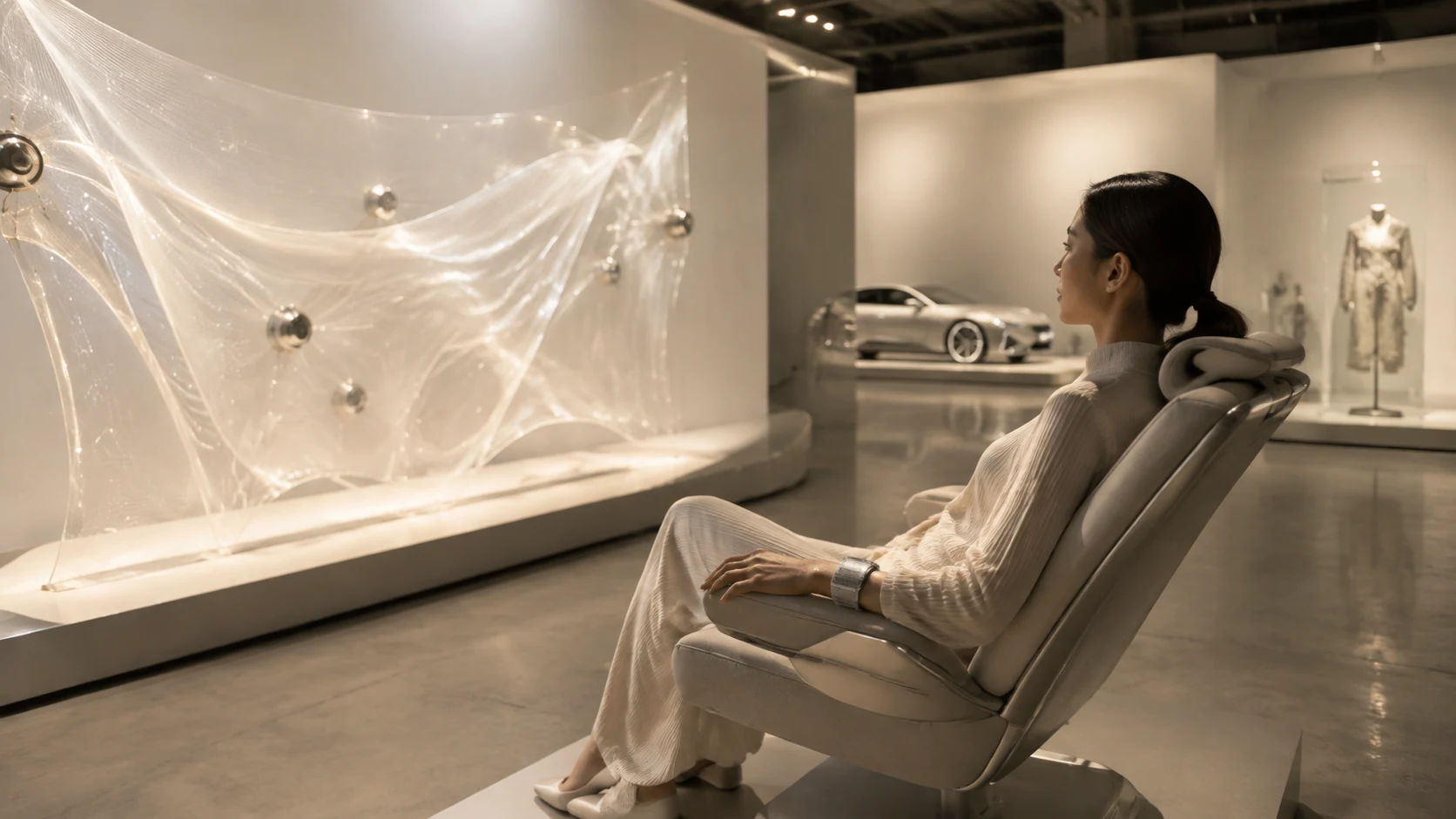 Haptic art immersion 2View original
Brands and the exhibition industry are quickly absorbing this trend. Automotive brands design the feeling of driving through seat vibration patterns instead of engine sounds, while fashion exhibitions seek to translate the physical properties of materials into digital touch for remote visitors. In education, haptic content has already moved beyond early practical application in areas where hand memory matters, such as surgical and maintenance training. Ultimately, touch becomes a central interface for learning, persuasion, and immersion, rather than a ‘nice-to-have effect.’
What, then, should artists prepare? First, design sensory layers separately. If sight, sound, and touch are all intense at once, the message becomes less clear. Second, define the role of touch in every scene. Its purpose—conveying information, intensifying emotion, or imprinting a memory—must be explicit. Third, assume individual differences. The same vibration may create immersion for one person and discomfort for another. Future artworks will likely come in multiple versions for different sensory profiles, rather than a single standard version.
3. Expanding Art’s Resolution: How Deeply It Reaches Us, Beyond How Beautiful It Looks
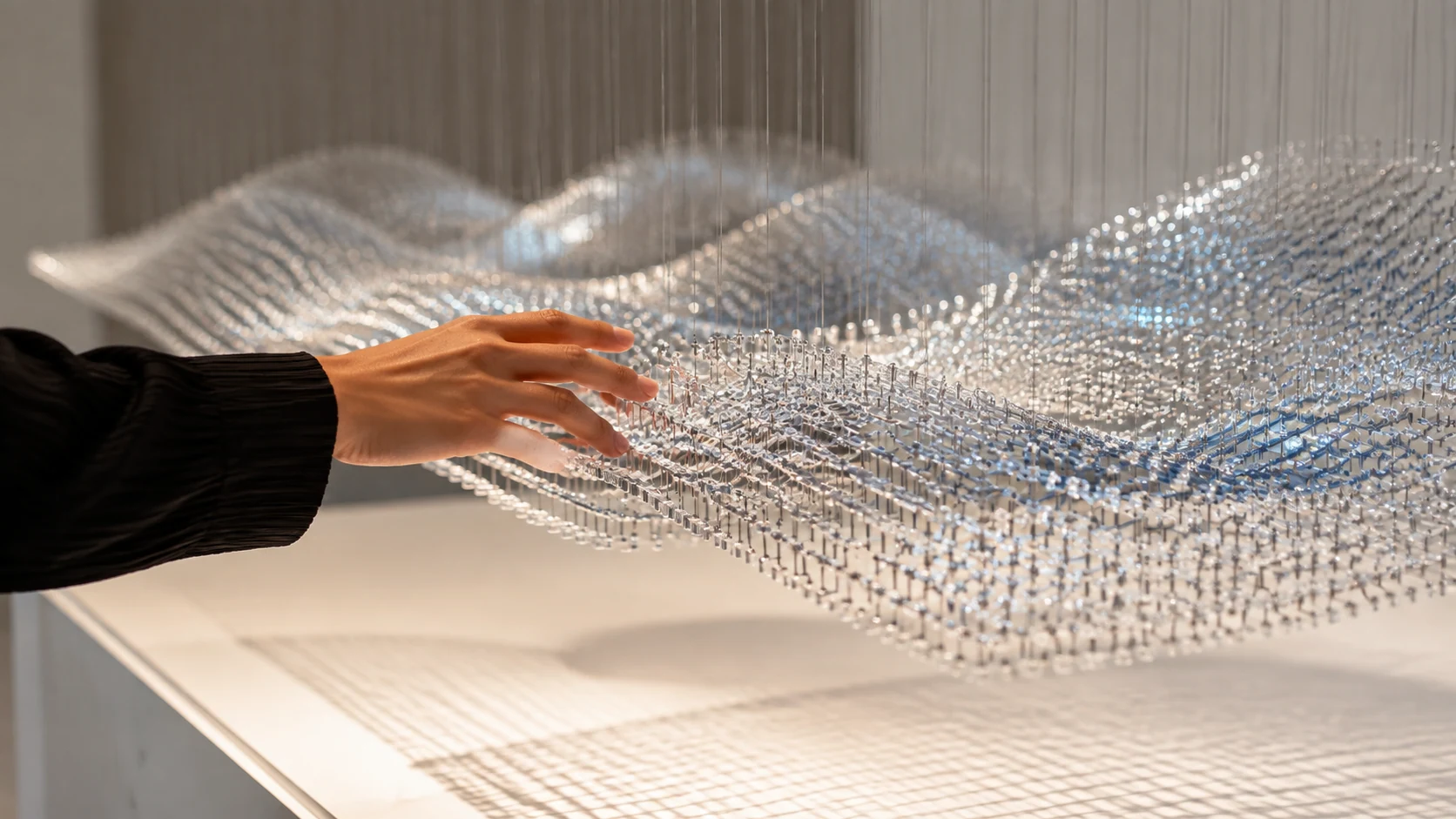 Haptic art immersion 3View original
I would like to call this change ‘an expansion of art’s resolution.’ I do not mean an increase in pixel count. I mean an increase in the number of channels through which emotion is conveyed. If sight creates the surface of a story, touch gives it body heat. And AI becomes a new editor, adjusting that warmth from scene to scene.
After experiencing art, we may increasingly say, ‘The sensation stayed with me,’ rather than ‘The scene was good.’ The criteria for art will change a little too. Beyond how beautiful it was, how precisely did it reach us? Passing beyond the age of sight, art is now beginning again at our fingertips.