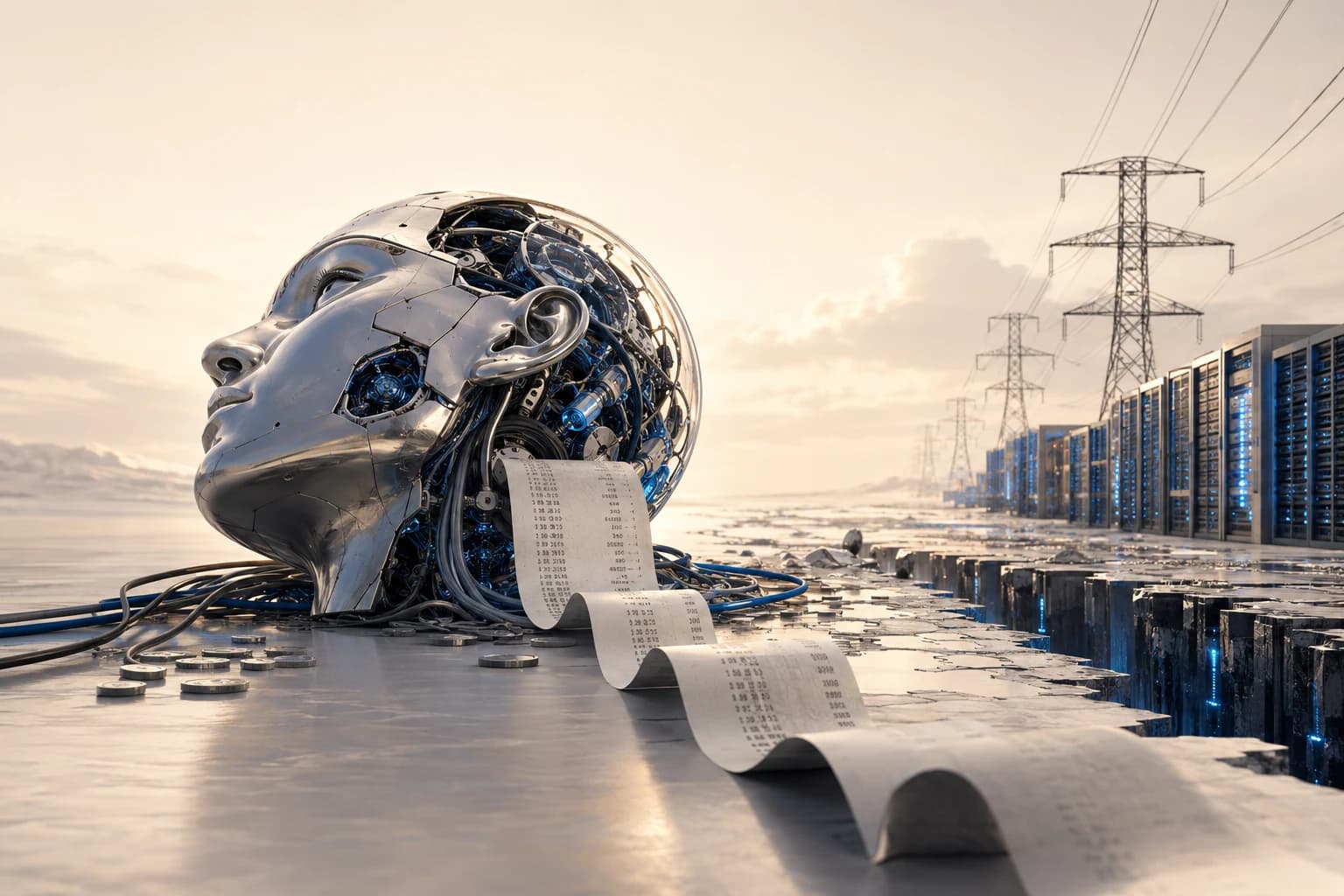
2025 was not the year AI proved its potential. That had already been amply demonstrated in 2023–2024; in 2025, the bill arrived. The year began with a David’s sling named DeepSeek and ended catching its breath before the realities of ROI and power infrastructure. Technology evolved at the speed of light, but companies raised slower, heavier questions.
Cost Pressure
“Models are cheap, so why are operating costs rising?”The counterattack of hidden costs.
Power Shortage
“Even with money, there is no electricity.”AI encounters physical limits.
Act I: The War of Gods
1) The DeepSeek shock: a revolution in value for money
January 27, 2025. The market still believed AI was a game for the wealthy. That was the day the belief broke. DeepSeek, a Chinese startup originating in a quantitative hedge fund, released the open-source DeepSeek-V3 and reasoning model R1, confronting Silicon Valley’s formula head-on. Its point was simple.
“Comparable performance can come from smarter design, not more expensive GPUs.”
DeepSeek achieved comparable performance at a cost of $5.6 million, contrasting with market estimates of $100 million to train GPT-4. This was more than a technical victory. It marked AI’s transition from luxury to utility, like water or electricity. Companies realized models themselves were increasingly converging on cost. The competition moved from the model to the workflow it was put to work in.
2) OpenAI vs Google: the platform war
The competition over who is smartest ended. The war became who could capture the standard fastest. In February, OpenAI’s Ghibli-style craze brought AI into the heart of popular culture, while Google countered by expanding the Gemini ecosystem.
The winner is decided by platform experience, not benchmark scores. The winner controls workflows through agents extending beyond text into images, video, voice, and tool use. Companies faced a strategic choice that year over which camp or ecosystem would bind them.
Act II: The Great Permeation
3) The video revolution: the victory of hard surfaces
If the Sora shock ended with “wow,” 2025 began with “so I tried it.” Success was uneven. AI fully penetrated Hard Surface advertising involving cars, metal, and products. Soft Tissue areas such as expressions and emotional exchange still failed to cross the uncanny valley. This reorganized marketing: Prompting and Curation, rather than filming, became the core competencies.
4) On-device AI: from cloud to edge
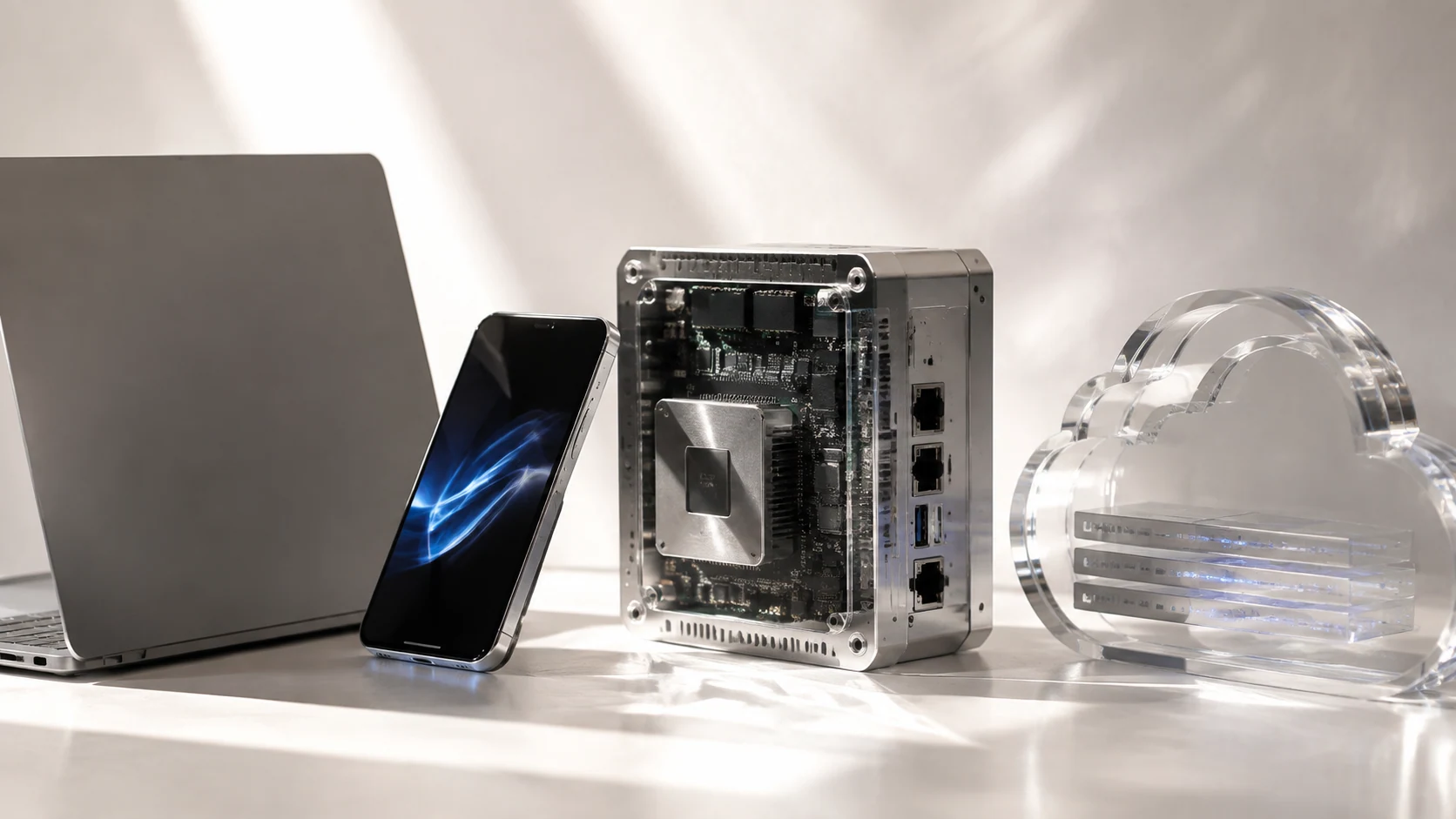
Cost and privacy pulled AI from server rooms onto our laptops and phones. The spread of Galaxy S25 devices and AI PCs is not merely a specification improvement. It redefines where data is processed and where responsibility remains.
5) Vibe coding: from writing to supervision
The inaugural year of Vibe Coding. Developers were no longer typists entering code line by line, but conductors directing overall Vibe and structure. AI IDEs such as Cursor and Windsurf made development productivity explode while also bringing the risk that anyone could mass-produce mistakes. What matters now is not coding skill alone, but the architect’s ability to understand and control systems.
Act III: Shadows of Progress
6) “We do not need new hires”
This is the most painful reality. As AI agents replaced tasks performed by juniors with three years of experience or less, hiring froze. Meanwhile, senior developer salaries soared. Companies celebrated immediate cost savings but soon faced the structural dilemma of where future seniors would be trained. A technological aristocracy and a collapsing ladder describe the labor market in 2025.
7) Security breakdown: the exploding cost of trust
Deepfakes became a social disaster rather than merely a technical problem. The cost of proving corporate content authentic, and massive data leaks caused by permission-management failures rather than hacking—including cases involving Coupang and Netmarble—changed the security paradigm. Once AI became a utility, security and trust became essential survival infrastructure rather than optional extras.
Act IV: The Bill Arrives
This was the shared question in every boardroom at the end of 2025.
The pickaxe sellers supplying infrastructure and chips made money, while Wrapper companies merely plugging in AI models collapsed. The market now asks about Margin rather than marveling at novelty.
AI also ultimately became a matter of physics. The enormous electricity consumed by data centers strained national grids and even prompted discussion of restarting nuclear power plants. Combined with political power, AI became a national strategic asset. It is no longer simply software. It is an energy industry and a matter of national security.
Closing: 2026 is the year of Proof
One sentence summarizes 2025. “AI became cheaper and stronger, but companies faced heavier realities: power, security, talent, and ROI.”
In the coming year of 2026, companies can no longer stall with PoCs. Only those that solve power issues and deliver real applications that change operating-profit figures will survive. Act I is over. Act II, the real contest, begins now.