In 2026, AI music generation is no longer a toy. Tools such as Suno and Udio now produce tracks that even professionals struggle to distinguish from human work. But the important question is this:
"So, how can I make money from it?"
Simply advising people to "make a song with AI and put it on Spotify" no longer works. This article reveals specific pipelines already generating thousands of dollars a month, along with the Real Work know-how that sets you apart.
Although this is a guide to Passive Income, remember that the process itself is thoroughly strategic Active Hustle.
Monetization Strategy 1: Selling Music Packs (AudioJungle, Pond5)
The approach with the greatest revenue potential is selling Packs, rather than individual tracks.
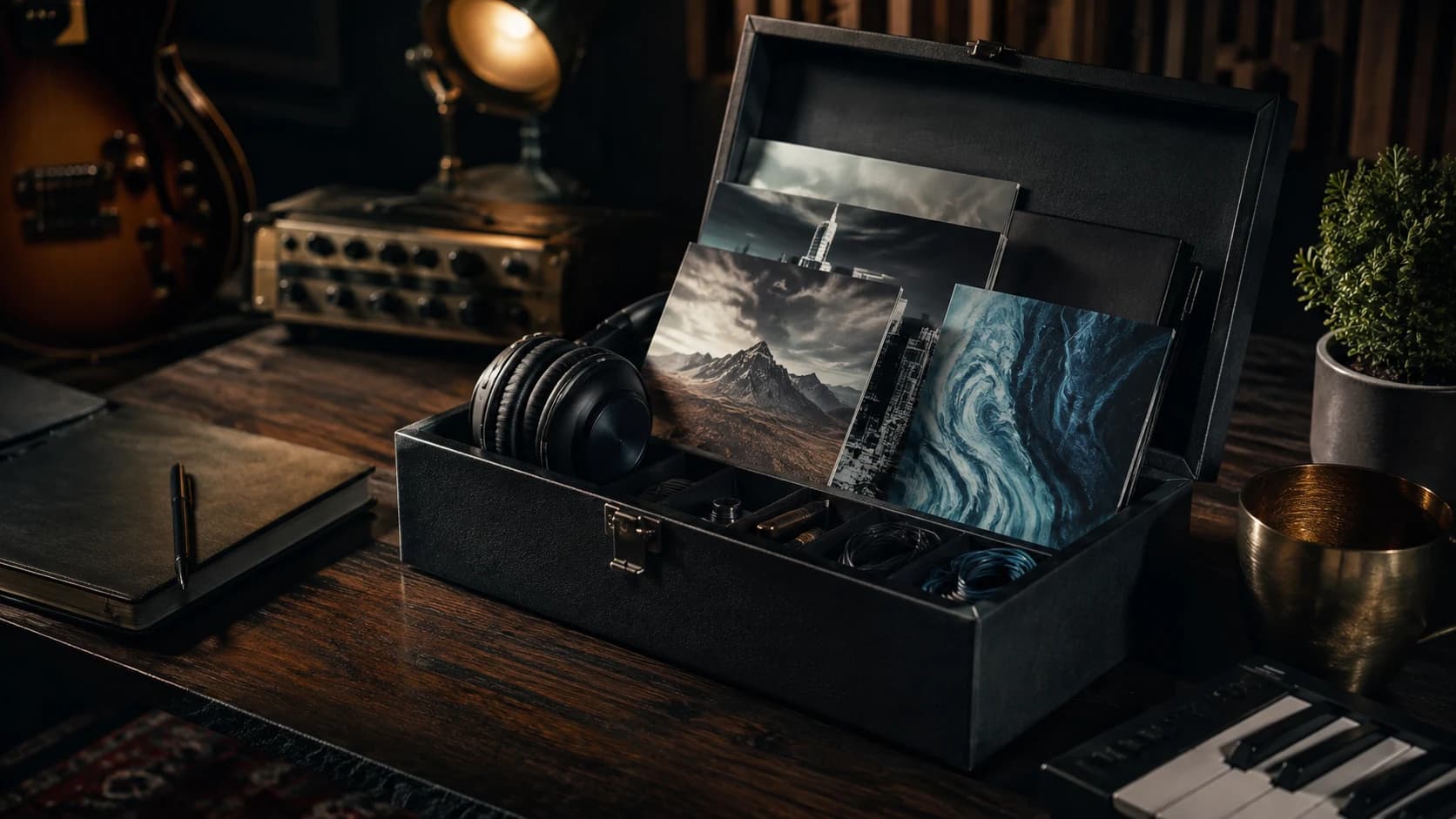 Music Pack Bundle ConceptView original
 Why a Pack?
When video editors or YouTubers look for background music, they do not buy just one track. They want several tracks with a similar feel to keep a video's atmosphere consistent.
- Strategy: Choose a clear theme, such as a 'Lo-Fi Study Pack,' an 'Upbeat Corporate Promo Pack,' or a 'Horror Film Ambient Sound Pack,' and bundle 10–15 tracks.
- Pricing: You can command a higher order value ($29–$49) than with individual tracks.
💡 Key Question: What Are the Approval Standards on Stock Music Platforms? (AudioJungle, Pond5)
Q. Do platforms like AudioJungle and Pond5 accept AI music? Aren't they strict?
This is the most important issue right now. Each platform has the following standards:
- AudioJungle (Envato): The strictest. It demands a flawless structure that feels "human-made." Tracks that simply repeat a melody are rejected. There must be a clear Intro, Build-up, Climax and Outro. Any audible AI artifacts (mechanical noise) in particular will lead to immediate rejection.
- Pond5: Relatively permissive, though you may need to disclose that the work was AI-generated. This is a place where a volume strategy can work.
- Approval tip: Include Stems to improve your approval rate. Providing separate bass, drum and melody files makes the music more useful to editors and dramatically increases the likelihood of approval.
Monetization Strategy 2: YouTube Content ID
This is the model with the strongest passive-income character.
 Passive Income Streams VisualizationView original
 A Structure That Earns While You Sleep
- Join a music distributor such as DistroKid by paying an annual fee (about $20).
- Enable the YouTube Content ID option (additional per-track charges may apply).
- Someone—a vlogger, café owner or other user—uses your music in the background.
- YouTube detects it and pays you a portion of the video's advertising revenue as royalties.
Earnings per track may amount to only a few dozen Korean won. But what happens when you have 50 or 100 tracks, and someone uses your music in a hit video? Revenue grows exponentially. Instrumentals without lyrics are particularly suitable as YouTube background music.
💡 Key Question: Copyright Issues and Risks
Q. Is music made with Suno AI really free of copyright problems? Can I sell it?
- Suno license: Commercial ownership of tracks generated while you use a paid plan (Pro/Premier) belongs to the user—you. Selling them therefore presents no problem 'under the terms.' Ownership continues even after you cancel your subscription.
- Copyright registration: However, bodies such as the U.S. Copyright Office have tended to reject registration for "purely AI-generated works without human creative involvement." In other words, it may be difficult to legally demand, "This is my song, so stop others from using it."
- Risk management: The greatest concern is imitating a famous singer’s voice or style. Do not enter prompts such as "in the style of Taylor Swift." You could face a costly lawsuit. Focusing on genres and moods is the safer approach.
Monetization Strategy 3: Custom Jingle Services (Fiverr, Kmong)
This is the fastest way to establish cashflow.
- Target customers: Podcast hosts, YouTubers and solo entrepreneurs.
- Service: "I will create a 30-second brand jingle or intro tailored to your brand."
- Competitive advantage: Speed. Where a professional composer might need 3 days, you can generate 10 proposals in 30 minutes for the client to hear. Clients are willing to pay for a variety of options and quick results.
💡 Key Question: Will It Work in the Korean Market, Such as Kmong?
Q. Is there demand on Korean platforms such as Kmong or Soomgo, rather than overseas Fiverr?
Yes, demand is exploding. The rapid growth of YouTube channels creates strong demand for "my own background music without copyright worries." Emphasizing "safe music that will not interfere with monetization" makes it particularly appealing to small business owners. Prices may be lower than overseas, but easier communication and less intense competition are advantages. Target the 'YouTube intro production' category.
The Key to Success: Curation and Post-Production (The "Real" Work)
This is where success and failure diverge. Simply "pressing Generate in Suno and downloading" will not make money. Anyone can do that.
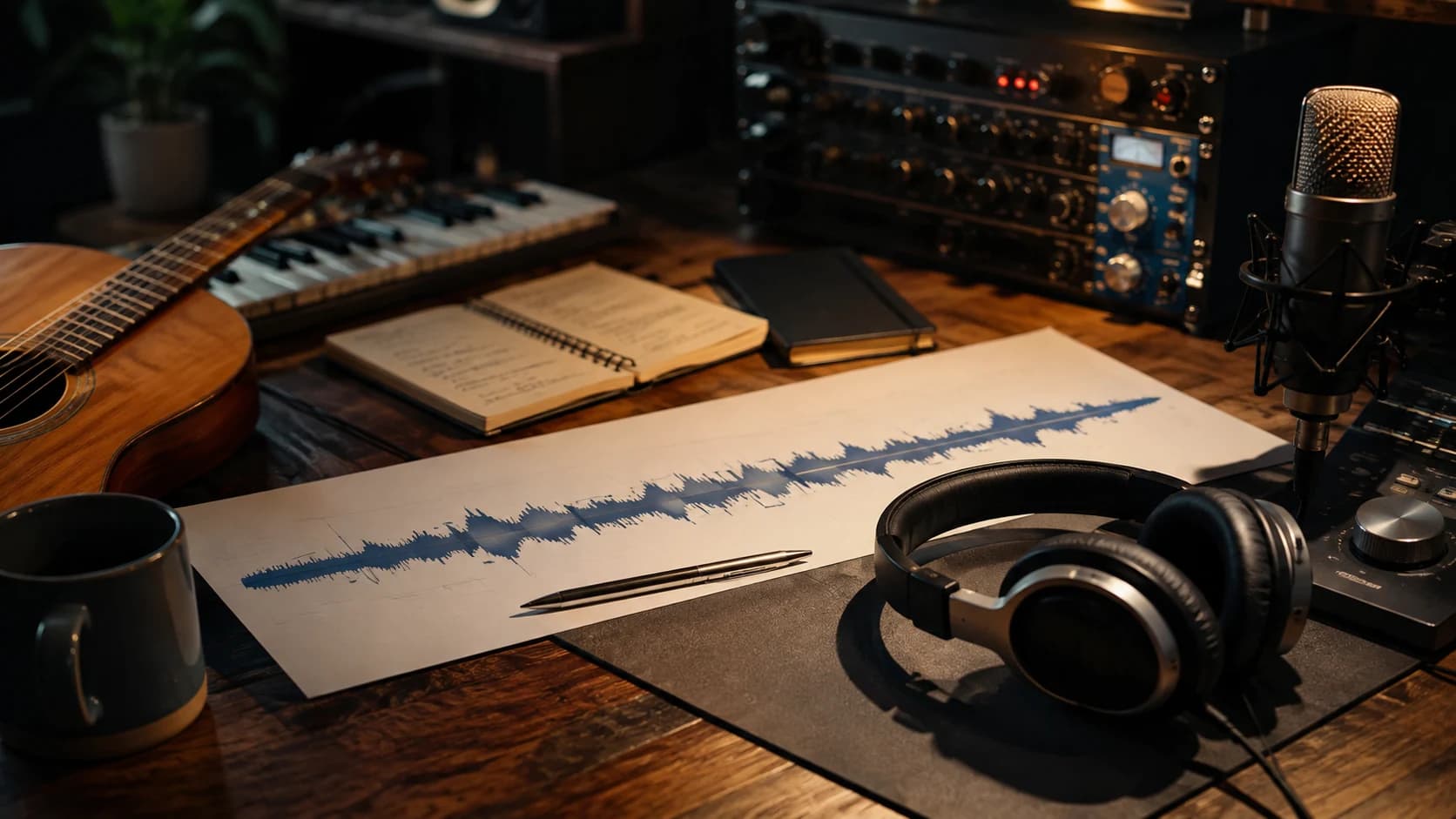 Audio Editing with AudacityView original
 1. The 100:1 Rule (Rigorous Curation)
90% of the tracks Suno generates are ordinary or disappointing. Be prepared to generate and discard 30, or even 100, versions to find one saleable track. Ruthlessly delete songs without a hook that catches your ear.
2. Polishing a Rough Diamond (Post-Production)
Uploading tracks untouched gives them an "AI smell." You need to refine them with tools such as Audacity (free).
💡 Key Question: Isn't Mixing/Mastering in Audacity Too Difficult?
Q. I didn't study music. Can I really handle EQ or compression?
There is no need to be intimidated. You can learn it in a day. We are not trying to make minute adjustments like professional composers. We are meeting the minimum specifications a track needs before it can be sold.
- Normalize: Raises volume to a consistent level. (Essential)
- EQ (Equalizer): Cuts muddy low frequencies and slightly boosts muffled highs. You can follow along after watching one YouTube tutorial.
- Fade In/Out: Makes the beginning and ending of a track sound natural.
Even these simple steps completely change the polish of a track. This is the difference between a product and raw material.
💡 Key Question: Tips for Writing Prompts
Q. How should I write a prompt to get the feel I want?
Follow this formula: [Genre] [Mood] [Instrumentation] [BPM].
- Bad example: "Make me an exciting song"
- Good example: "Upbeat funk pop, groovy bassline, energetic brass section, 115 bpm, bright and happy mood, advertisement style"
Knowing Specific Sub-genres gives you a particular advantage. AI responds much more precisely to "Tropical House" or "Deep House" than to just "House."
Summary: A Five-Step Action Plan to Start Immediately
Nothing will happen if you finish this article thinking, "I should try that someday." Here is a roadmap you can begin today.
Step 1: Set Up Your Tools (Day 1)
- Subscribe to a paid Suno AI plan (Pro or higher recommended to secure commercial-use rights).
- Install Audacity (a free audio editing tool).
Step 2: Research the Market and Choose Your Target (Day 2)
- Search for 'No Copyright Music' on AudioJungle or YouTube.
- Find the TOP 3 genres with high view counts. (Lo-Fi, Corporate and Cinematic are usually common.)
- Choose one genre and focus on it.
Step 3: Produce in Volume (Day 3–4)
- Generate tracks in your chosen genre. Your goal is to collect 10 usable tracks.
- You will probably need more than 100 generations. Do not be afraid of failure. One click lets you try again.
Step 4: Post-Production and Packaging (Day 5)
- Import the 10 selected tracks into Audacity and refine them. (Normalize, fade out.)
- Give the pack a name such as 'OOO Theme Music Pack Vol.1' and create a thumbnail using Canva or Midjourney.
Step 5: Distribute and Expand (Day 6~)
- Upload to Pond5 first (approval is relatively fast).
- Release on Spotify, Apple Music and YouTube Music simultaneously through DistroKid.
- List a service on Kmong: "I create copyright-free background music for YouTube."
Opportunities reveal themselves only to people who act. Generate your first track right now. A year from now, that small beginning might have become a monthly 'salary' appearing in your bank account.