
The search box has long been the internet’s entrance. The next competition, however, will be about verifying faster and finishing more safely, rather than showing better links.
Until recently, ranking was the heart of search. Better indexes, more sophisticated ranking models and faster retrieval of more pages determined the winner. Generative AI layered onto search has changed expectations. People no longer take opening and comparing ten links for granted. They expect a question to begin a flow that understands context, collects sources and, when needed, leads to real action. The important change is this: search remains an information-discovery function, but the main stage users experience moves to the agent layer inside the browser.
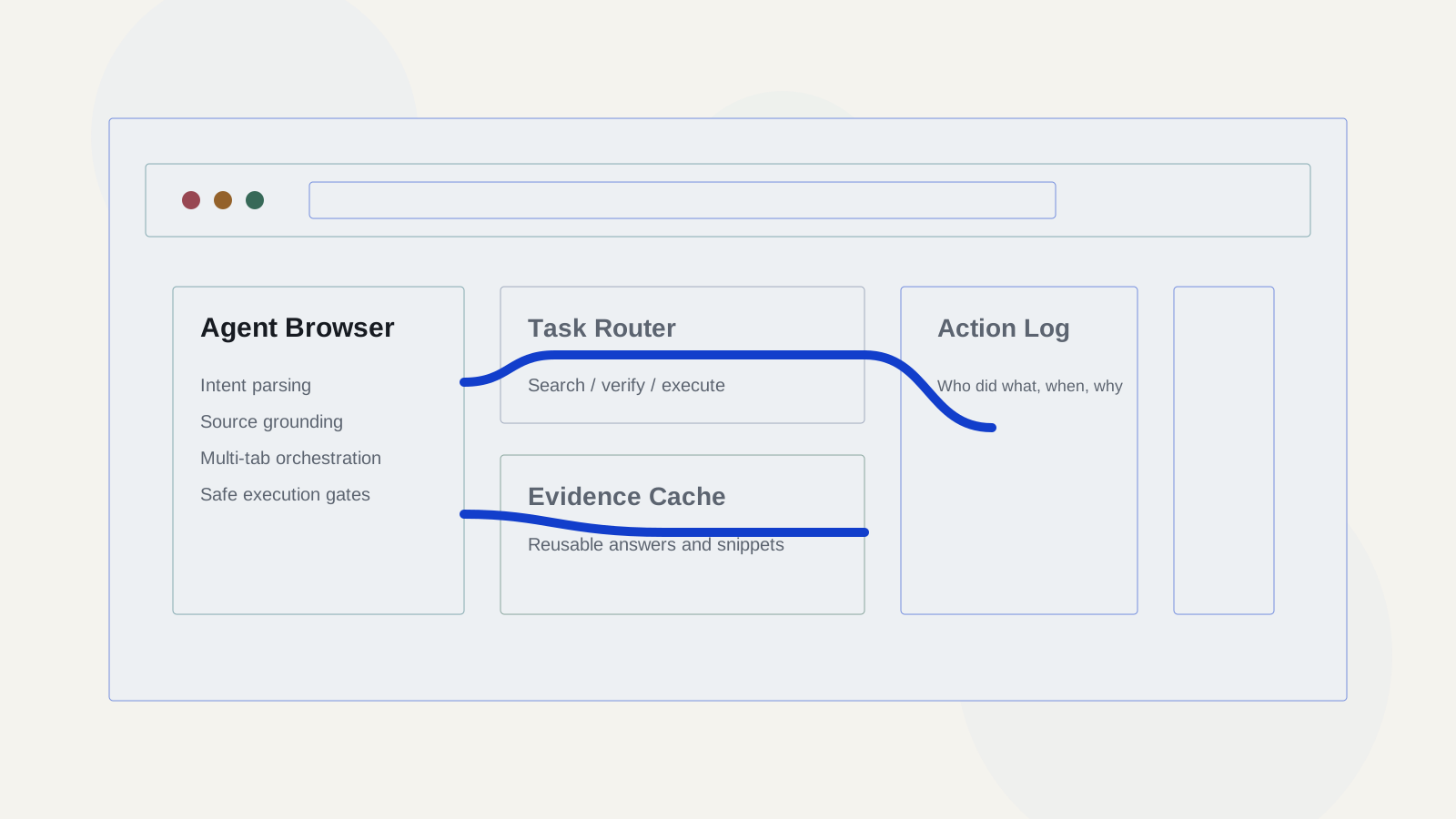
A browser agent is not simply a chatbot. It reads the state of open tabs, compares the reliability of sources and chooses the next action according to the user’s intent. A search engine used to say, "Here are pages worth reading." A browser agent is closer to saying, "I read and compared them first, organized this much based on this evidence, and can execute the next step if you want." This is more than an extra UI layer; it changes the rhythm of using the internet.
1. Search Value Moves from Link Lists to Completed Work
Search engines traditionally excelled at breadth: indexing as many web pages as possible and quickly showing the closest matches. What users really wanted was always a little different—not the results page itself, but less uncertainty and a decision about the next action. That is why, after seeing results, we opened multiple tabs, compared them, searched again, took notes and finally judged for ourselves. Technically the search was finished; from the user’s perspective, the work was not.
Browser agents move into this remaining stretch. A team adopting a particular tool, for example, does not stop at a feature comparison. It must determine in one flow whether pricing recently changed, which problems recur in adoption reports, and which plan suits its current organizational size. Traditional search left all that to people. The agent layer uses search results as material connecting summaries, comparisons, organized evidence and proposed actions. Competitive strength shifts from showing the most to reaching a conclusion with the least friction.
 Browser agents search surface 1View original
This affects advertising, SEO and publishing strategy as well. Click-attracting titles and meta descriptions still matter, but more important is structure agents can easily read and reuse: clearly sourced sentences, data with visible freshness, comparable standard expressions, and verifiable claims instead of contextless exaggeration. A web page becomes both a landing page for humans and a data source for agents. Search visibility optimization alone will likely be insufficient; optimization for agent interpretation may become a new axis of competition.
2. Safer Execution Matters More Than Smarter Answers
Many services already add AI summaries. Summaries alone, however, do not sustain differentiation. Users are truly impressed when an answer leads to a useful action, rather than by its wording: booking a meeting room, drafting a quotation after comparing SaaS prices, explaining refund steps after checking airfare rules, or beginning an investigation after noticing dashboard anomalies. The essence of a browser agent is then an execution system with defined boundaries, not merely an eloquent model.
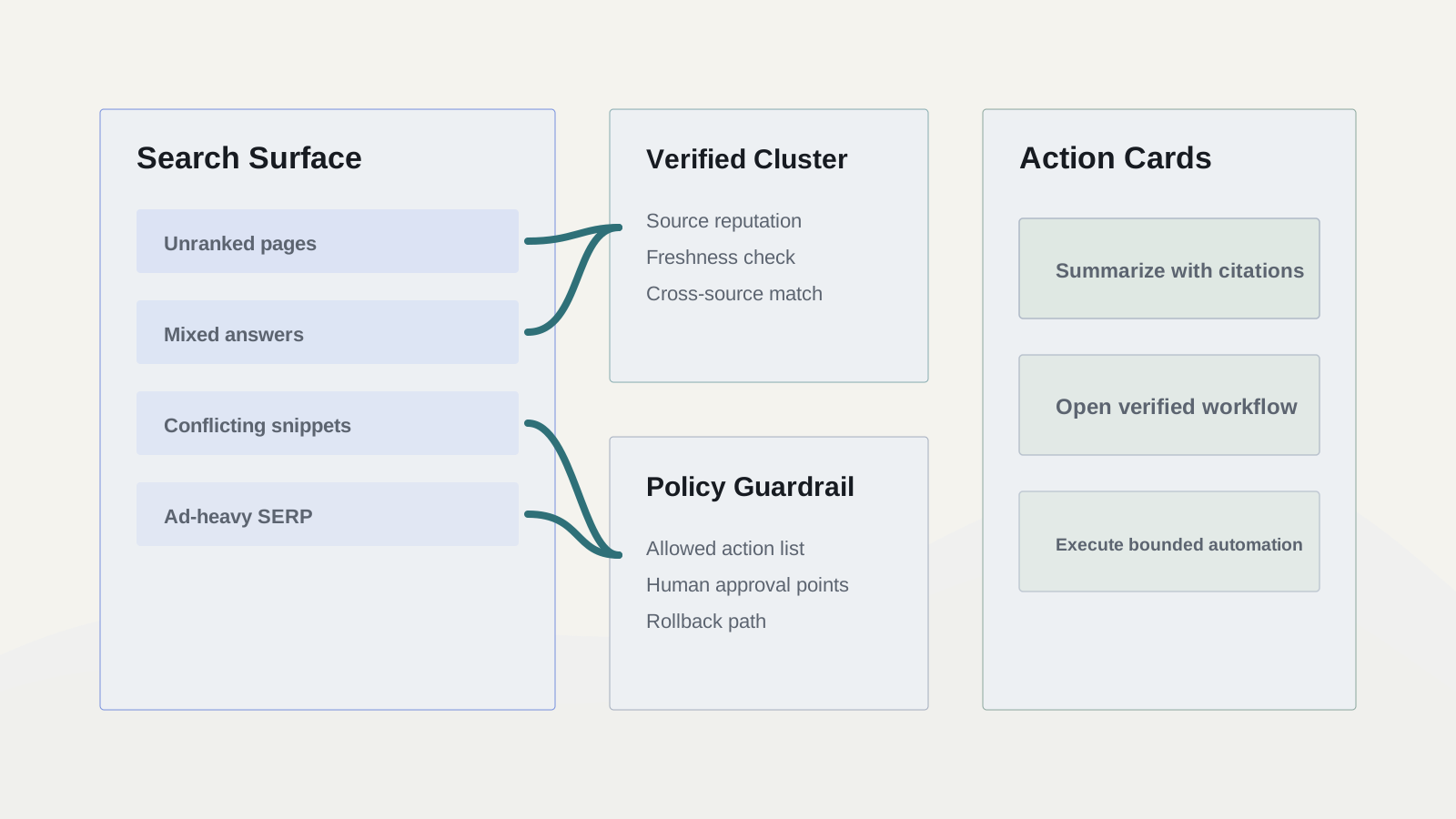
Execution increases risk as well. An agent might read the wrong page, act on outdated information or touch sensitive contexts such as login state and payment flows. Future browser competition therefore cannot be explained by model capability alone. Operational design becomes central: which pages to trust, when to insert human approval, how far to automate, and what can be rolled back after a problem. As browsers become agentic, product teams must become policy-engine, audit-log and safe-automation teams as well as search-quality teams.
 Browser agents search surface 2View original
The important thing is to avoid the fantasy of complete automation. A good browser agent precisely distinguishes where human judgment is needed, rather than doing everything in our place. Delegate information collection and drafts quickly, but keep approval procedures for high-responsibility actions such as spending money, changing accounts and external sending. Users want an intelligent assistant and a predictable one. However well it answers, it will not be adopted as a work tool if it cannot be controlled.
3. The Next Platform May Be a Browser with a Work Surface, Rather Than a Search Engine
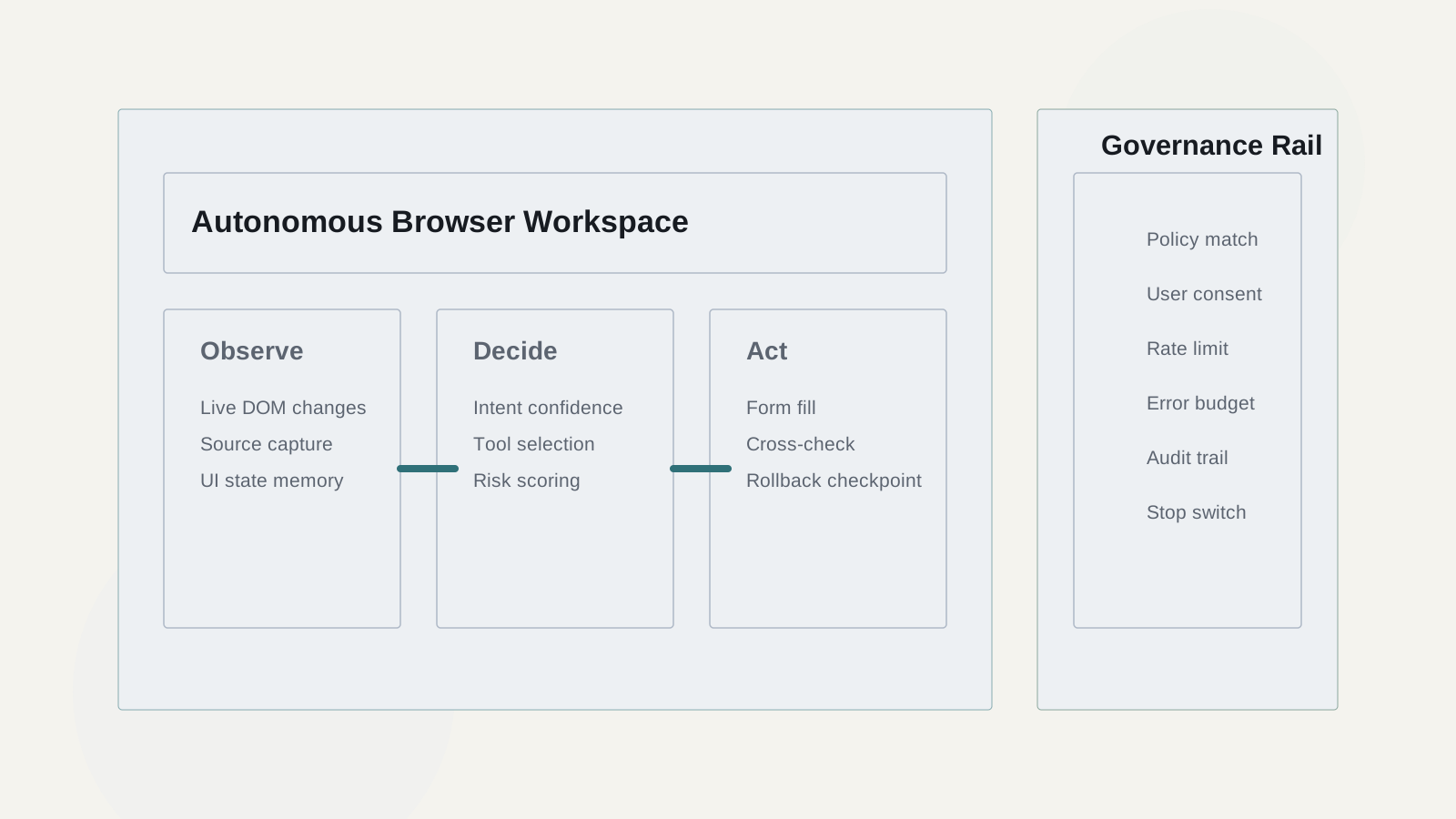
For the past 20 years, our pattern of consuming the web has changed little: search, click, read, copy, paste and move again. Now this repetition is folding into a single work surface. When an agent maintains context across tabs, connects the document just viewed to the sentence being written, and automatically brings in supporting evidence, search recedes from an independent destination into something like a backend function.
As this change takes hold, the browser may occupy a position closer to an operating system than a simple renderer. The reason is clear: search, writing, payments, collaboration and SaaS operations all happen inside it. The layer that best understands actual user behavior becomes the strongest agent layer. Future leadership is therefore open not only to companies with search indexes but also to browser platforms capable of safely connecting tabs, sessions, permissions, history and user intent.
 Browser agents search surface 3View original
Search ultimately does not disappear. It steps back from the foreground. Users still need information from the web, but will spend less and less time digging through it themselves. The winners will provide more trustworthy conclusions and execution with less friction, rather than generate more answers. Saying the age of the search box is ending may be an exaggeration. Saying that the age of search as the protagonist is fading has become quite realistic.